The Parable of the Scribe

Then said he unto them, Therefore every scribe which is instructed unto the kingdom of heaven is like unto a man that is an householder, which bringeth forth out of his treasure things new and old. Mat. 13:52 KJV

Christ, the householder, authorizes His disciples to be scribes and in this parable, the scribe is the individual follower of Christ, who is sufficiently instructed in the things of the kingdom of Heaven to have a treasure of knowledge of things both new and old. He is “like” an householder which has treasures both new and old to bring out for the benefit of those in need. This illustrates the mixture of old and new truths in the members of the kingdom of Heaven, which enables them to be ready for all emergencies in instructing others in the things of the kingdom of Heaven. Both old and new truths are good. Both are necessary and helpful if the disciple is to be a workman unto God, needing not to be ashamed, rightly dividing the Word of Truth in the realm of profession. Ministers must thoroughly understand truth and be able to disperse it abroad. “Things new and old” is a Jewish idiom of great plenty.

The Parable of the Pearl of Great Value

Again, the kingdom of heaven is like unto a merchant man, seeking goodly pearls:  Who, when he had found one pearl of great price, went and sold all that he had, and bought it. Mat 13:45-46 KJV

The kingdom of Heaven, is “like” a pearl, thus the “realm of profession,” which should always be understood in connection with things on Earth. The mystery of the kingdom of Heaven here is that of the true Church. The parable of the treasure exemplifies Israel in relation to the kingdom of Heaven. In that parable Israel is pictured with an earthly calling and hid in the world so that it had to be bought in order to get the treasure, but in this parable the pearl is bought without buying the world, for the calling of the Church is heavenly. The sons of God (the wheat) are the true children of the kingdom and make the present Church, but the sons of the devil (the tares), who profess to be children of the kingdom, are also in the “sphere of profession,” endeavoring to counteract God’s purpose in the kingdom. This parable emphasizes the fact that the Church is not the kingdom of Heaven. It is only a part of the kingdom of Heaven.

The man illustrates Christ, as in all the preceding parables. Mt. 13:3, 24, 37, 44 and the pearl illustrates the true Church that Christ gave all for in order to buy it and redeem it to Himself. Eph. 5:25-31  The great price illustrates the treasure of Heaven that God had to give in order to get the human race redeemed from the devil. Jn. 3:16; 6:51; 10:11, 18; 19:30; 1 Cor. 6:20; 1 Pet. 2:24; Rev. 5:6, 9; 12:11  Pearls are sometimes formed by the introduction of a foreign body, possibly a grain of sand, into the muscular structure of an oyster, which secretes a substance about the sand, layer after layer, until a beautiful pearl is formed. This is a wonderful picture of the gradual formation of the body of Christ. 1 Cor. 10:17; 12:12-28; Eph. 2:14-22; 4:11-16; 5:25-31

For we being many are one bread, and one body: for we are all partakers of that one bread.  1Cor. 10:17 KJV

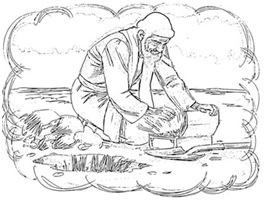
The Parable of the Hidden Treasure

Again, the kingdom of heaven is like unto treasure hid in a field; the which when a man has found, he hide, and for joy thereof go and sell all that he had, and buy that field. Mat. 13:44 KJV

The treasure illustrates Israel in the kingdom of Heaven, partaking in the kingdom or realm of profession in this age. She, Israel, is like a treasure Ps. 135:4; Ex. 19:5; Mal. 3:17 hidden or lying in the world in the sense that Israel’s testimony as witnesses for God is veiled, Rom. 9:111:29  lying dormant and failing to fulfill her calling. The field is the world as in all preceding parables. Mt. 13:38 The treasure was not in the world when the devil took possession of it. When Christ came to seek the treasure it was hidden in the world. The man is Christ Mt. 13:34,37 seeking the treasure. Jn. 1:11-12; Mt. 23:37-39 and joyfully gives His all to buy the field Jn. 11:51; Rom. 8:17-25; 1 Pet. 1:18-19; 2 Pet. 2:1 to get the treasure and all else in the field. Php. 2:5-8; 2Cor. 8:9; Tit. 2:14; Heb. 12:1-2 The treasure, though found, Mt. 10:6; 15:24; 23:37-39; Acts 13:46 remains hidden in the world until Christ comes to take possession of it at His second coming. Rom. 11:25-29; Lk. 21:24; Lk. 1:32-33; Isa. 9:6-7 Then the treasure, as well as the field, will be His. Eph. 1:14; Rom. 11:25-28; Lk. 21:24; Rev. 19-20; Rom. 8:17-25 His joy in giving all for the field is experienced in view of the glorious restoration of all things and the treasure, Israel, exalted and made a blessing to all nations as originally planned. Heb. 12:2; Rom. 11; Lk. 1:32-35; Isa. 9:6-7

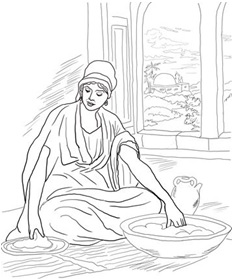
The Parable of the Leaven

Another parable spoke He unto them; The kingdom of heaven is like unto leaven, which a woman took, and hid in three measures of meal, till the whole was leavened. Mat. 13:33 KJV

The kingdom of Heaven here is “like” leaven (sour dough) that is always used in a bad sense in Scripture, as meal is in a good sense. Therefore, the common interpretation of leaven converting the world is the exact opposite of the true interpretation of the leaven corrupting the meal. Note the use of leaven in Scripture:

In the Old Testament leaven is used to portray the evil nature of the sinner: Exodus 12:8, 15-20; 34:25; Levitikus 2:11; 6:17; 10:12 These last three passages refer to leaven being forbidden in certain sacrifices. Only in one sacrifice was it used in Levitikus 7:12-13 and here it signifies that though the believer has made peace with God through the work of another (Christ), there are still human traits and selfishness in him which must be continually purged by growth in grace.

In the New Testament leaven is used in four ways: first, the leaven of the Pharisees which was external religion, legalism, and hypocrisy; Mt. 23:14-28; Lk. 12:1 second, the leaven of the Sadducees, which was skepticism as to the supernatural and the teachings of the Scriptures on resurrection, angels, and spirits; Mt. 22:23-39; Acts 23:8 third, the leaven of the Harridans, which was materialism, a mixture of religion and worldliness, a political religion; Mk. 8:15 fourth, the leaven of both Pharisees and Sadducees as to their evil doctrines and practices. Mt. 16:11-12; 23:14, 16, 23-28

This illustrates how the kingdom of heaven teachings and the program of God in this age would become corrupted by false doctrines and unscriptural programs until the whole is corrupted. Lk. 18:8; 1Tim. 4:1-8; 2Tim. 3:5; 4:3-4; 2Pet. 3:3-4  A woman is a common symbol of evil in the moral or religious sphere and when used figuratively in an evil sense ‘she’ represents wickedness, fallacy, uncleanness, and unfaithfulness, Lam. 1:17 harlotry, Ezek. 16:15,22,26,28-59; 23:1-49; 36:17; Hos. 1:2; 2:2-17; 3:1; Rev. 17 wickedness, Zech. 5:5-11; Rev. 17:5 and false religion. Rev. 17 Thus, in a bad ethical sense a woman always symbolizes something wrong or out of place religiously.  Zech. 5:7-8; Rev. 2:20; 17:1-18  When used in a good sense women represent Israel, cp Gen. 37:9-10 with Rev. 12; Ezek. 16 the two covenants, Gal. 4:21-31 and righteousness and purity. 2Cor. 11:2; Rev. 19:7-8 A meal symbolizes the Word of God. Mt. 4:4; Jn. 6:47-63 and the three hidden measures of the meal illustrates all false teachings, religious programs, and professed Christian lives that seek to hide behind the Word of God (Christ as the Bread of Life and the Word of God Mt. 4:4; Jn. 6:47-63; Jn. 1:1).

The parable illustrates how the kingdom of Heaven would become like leaven, which a woman uses to corrupt Christ and His teachings. Both Christ and the Word of God are being corrupted today by the false church and its teachings. These teachers dominate the realm of profession and use it to deceive people by exalting their own words above the Word of God and their own leaders above Christ; by making the people feel that their church is infallible and that obedience to it and its dogmas is better than obedience to civil governments and by many comparable doctrines contrary to the Bible, thus corrupting the truth through the realm of profession.

Your glorying is not good. Know ye not that a little leaven leaven the whole lump? Purge out therefore the old leaven, that ye may be a new lump, as ye are unleavened. For even Christ our passover is sacrificed for us: Therefore let us keep the feast, not with old leaven, neither with the leaven of malice and wickedness; but with the unleavened bread of sincerity and truth. 1Cor. 5:6-8 KJV

The Purpose of Parables

And the disciples came, and said unto him, Why speak thou unto them in parables? He answered and said unto them, Because it is given unto you to know the mysteries of the kingdom of heaven, but to them it is not given.  Mat. 13:10-11 KJV

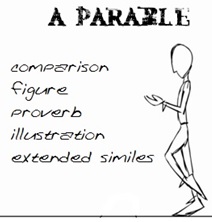
A parable: the Greek word parabole (GSN-<G3850>) is a comparison, Mk. 4:30 figure Heb. 9:9; 11:19 proverb Lk. 4:23 and an illustration; Mt. 13:3,10,13,18,24,31-36,53; 15:15; 21:33,45; 22:1; 24:32 they are extended similes.

They illustrate truth and make it clear by comparison with something that is already familiar. They impart instruction and rebuke without causing offense.  2Sam. 12 They create interest and hunger for further information. Mt. 13:10-17; 2Sam. 12  The stories are always true and the points illustrated must not be considered false and absurd. The historical background and the circumstances and occasion when uttered must be understood. Their words and details must be defined literally, not spiritually. The similarity between the point illustrated and the illustration must be noted.  The point illustrated is always stated with the parable or is clear by the occasion uttered.  The principles of interpretation are given by Jesus Himself. Any interpretation at variance with these principles or with the purpose of the parable is unscriptural.

Parables were used to reveal truth in a form intended to create more interest; Mt. 13:10-11,16 to make known new truths to interested hearers; Mt. 13:11-12,16-17 to make known mysteries by comparison with things already known; Mt. 13:11 to conceal truth from disinterested hearers and rebels at heart; Mt. 13:11-15 to add truth to those who love it and want more of it; Mt. 13:12 to take truth away from those who hate and do not want it; Mt. 13:12 and to fulfill prophecy. Mt. 13:14-17,35

For whosoever hath, to him shall be given, and he shall have more abundance: but whosoever hath not, from him shall be taken away even that he hath. Therefore speak I to them in parables: because they seeing see not; and hearing they hear not, neither do they understand. Mat. 13:12-13 KJV

A mystery is a secret previously hidden but now made clear so that no mystery remains for anyone who will accept the truth as revealed. Mt. 13:19; 2Cor. 4:3-4  At present the realm of profession, for tares and wheat and good and bad are now mixed together in the same kingdom. At the end of this age the two classes will be separated. The professors will be sent to hell and the possessors of the kingdom will continue in its literal aspect forever. Mt. 13:40-43,49-50; Mat. 25:31-46; Rev. 20; Zech. 14  Believers increase in knowledge, but unbelievers go into more ignorance and darkness. Rom. 1:18-32; Tit. 1:15; 1Jn. 1:7; Jn. 3:16-20 This is a work of man’s own unbelief and rebellion and the work of satan. Mt. 13:15,19; 2Cor. 4:3-4  They can see, but they refuse to see; they can hear, but they refuse to hear; they are capable of understanding, but they refuse to accept the truth, desiring to hold on to their old religious traditions and professions in preference to walking in the light of new truth.

And in them is fulfilled the prophecy of Esaias, which said, By hearing ye shall hear, and shall not understand; and seeing ye shall see, and shall not perceive: For this people’s heart is waxed gross, and their ears are dull of hearing, and their eyes they have closed; lest at any time they should see with their eyes, and hear with their ears, and should understand with their heart, and should be converted, and I should heal them. Mat. 13:14-15 KJV

This Old Testament prophecy of Israel written by Isaiah 6:9-10 is fulfilled in Matthew 13:14-15 Jn. 12:39-40; Acts 28:25 describing the condition of their hearts as being made fat, stupid, insensible, inattentive, dull, and callous. Acts 28:27 The idea here is that the people became this way, little by little, until they were past normal, vigorous obedience to truth and righteousness, but they were failing to do, see, hear, and understand with the heart.  They missed out on the promised blessings of conversion, a change of direction, a new walk with God and of physical healing, a change of health, a new health in God. Ps. 91; 103:3; Mt. 8:17; Isa. 53; Rom. 8:11; 1Pet. 2:24; 3Jn. 1:2; Jas. 5:14-16; Mk. 16:17-18; Jn. 14:12-15; 15:7,16

All these things spoke Jesus unto the multitude in parables; and without a parable spoke He not unto them: That it might be fulfilled which was spoken by the prophet, saying, I will open my mouth in parables; I will utter things which have been kept secret from the foundation of the world. Mat. 13:34-35 KJV