
The Unbelief of People

John 12:37-43 But though he had done so many miracles before them, yet they believed not on him: That the saying of Esaias the prophet might be fulfilled, which he spake, Lord, who hath believed our report? and to whom hath the arm of the Lord been revealed? Therefore they could not believe, because that Esaias said again, He hath blinded their eyes, and hardened their heart; that they should not see with their eyes, nor understand with their heart, and be converted, and I should heal them. These things said Esaias, when he saw his glory, and spoke of him. Nevertheless among the chief rulers also many believed on him; but because of the Pharisees they did not confess him, lest they should be put out of the synagogue: For they loved the praise of men more than the praise of God. 

‘They believed not on him’ For them to believe was the purpose of the miracles then, and it still is today. Yet, so many still don’t ever become doers of the Word and also serve Christ for earthly benefits and gain (1Cor. 15:19).

The 7th Old Testament prophecy fulfilled in John: ‘Lord, who hath believed our report? and to whom hath the arm of the Lord been revealed?’

The “arm of the Lord” expresses His miraculous power (Psa. 98:1; Isa. 52:10; 53:1; 59:16; 63:5; Acts 4:30; 11:21; 13:11).

The 8th Old Testament prophecy fulfilled in John (Isa. 6:9-10) “He hath blinded their eyes and hardened their heart; that they should not see with their eyes, nor understand with their heart and be converted, and I should heal them.”

‘Converted, and I should heal them’ Two things promised believers here: conversion, a change of direction, a new walk with God (Psa. 19:7; 51:13; Isa. 6:10; 60:5; Matt. 13:15; 18:3; Mark 4:12; Luke 22:32; Acts 3:19; 15:3; 28:27; Jas. 5:19-20) and physical healing, a change of health, a new health in God (Exo. 15:26; Psa. 91:1-16; 103:3; Isa. 6:10; 53:1-12; Matt. 8:17; John 10:10; Rom. 8:11; 1Pet. 2:24; 3Jn. 1:2; Jas. 5:14-16).

To accept the literal fulfilment of only half of this prophecy is wrong. The way Jesus demonstrated healing and conversion together is proof that both are still for all men (Matt. 8:17; 9:5, 35; 10:1-8; 12:28; 13:15; John 10:10; Acts 10:38). Shall we say that it is easier to forgive than heal? That it was only God’s will that He does this for men for a limited time? That God does not care to bless His children this way today? That He loved them for only a few years? That the work of Christ on the cross has lost its power? That the promises, provision, and benefits started with the gospel were only temporary? Or, shall we return to God and the original gospel benefits, trust Him in all our well-being?

‘His glory’ Jesus here applies Isaiah 6:1-13 to Himself, proving His deity and pre-existence. ‘Many believed on him’ only two are named (John 19:38-39).

Many still love the praise of men more than the praise of God. They permit fear of disgrace, love of the praise of men, riches, and temporal advantages to make them cowards and too weak in faith to bear the reproach of Christ (Heb. 11:26; 13:13; 1Pet. 4:14).
Emptied Himself

John 5:17-18 But Jesus answered them, My Father work hitherto, and I work. Therefore the Jews sought the more to kill him, because he not only had broken the sabbath, but said also that God was his Father, making himself equal with God. 

God the Father works on all days in upholding Heaven and Earth and running its infinite mechanism; He works in providence, watching over and caring for all creation of dependent creatures, so here Christ worked in healing on the sabbath, in providing food for the hungry, and performing acts of mercy and love. This was the true principle of sabbath observance if there is to be any recognition of one day above another (Rom. 14:5-6). We are not to rest in indolence or merely rest from physical and mental toll, but we are to follow the divine examples and “do good on the sabbath days” (Mat. 12:12; Mark 2:27-28; 3:4; Luke 6:9; 13:16; John 7:22-23; Gal. 4:9-10).

‘Hitherto, and I work’ refers to the delegated authority given to Jesus Christ by the Father (John 5:19-40; Heb. 1:1-2). He was working the works that the Father gave Him to do.

‘But said also that God was his Father’ This was another reason for wanting to kill Him. All Jews considered God as their Father, but here they understood Him to mean that God was His personal Father making Him equal with God. Before becoming man, Jesus was equal with both the Father and the Holy Spirit. He had a spirit body and all the natural attributes and powers like them; but in becoming man He laid aside this God-form and “emptied Himself” to be like man (Php. 2:5-11).

Miracles

John 2:6-12  And there were set there six waterpots of stone, after the manner of the purifying of the Jews, containing two or three firkins apiece. Jesus saith unto them, Fill the waterpots with water. And they filled them up to the brim. And he saith unto them, Draw out now, and bear unto the governor of the feast. And they bare it. When the ruler of the feast had tasted the water that was made wine, and knew not whence it was: (but the servants which drew the water knew;) the governor of the feast called the bridegroom, And saith unto him, Every man at the beginning doth set forth good wine; and when men have well drunk, then that which is worse: but thou hast kept the good wine until now. This beginning of miracles did Jesus in Cana of Galilee, and manifested forth his glory; and his disciples believed on him. After this he went down to Capernaum, he, and his mother, and his brethren, and his disciples: and they continued there not many days. 

The six waterpots of stone were proportioned to the number of wedding guests and each pot contained 122 litres an in total for the 6 pots there were 736 litres.  The ruler of the feast would have been either a chief guest, a friend of the bridegroom or a chief domestic who attended to the supply of the others.

“Every man at the beginning doth set forth good wine” This is man’s way. God’s way is to give the best first, and always, and when they have “drunk well” which means to drink freely, not when they are all drunk, as some suppose.

And with this wedding, the miracles of Jesus Christ on earth began, not as some apocryphal books state falsely that He did some childhood miracles.

The Greek word for miracles is semeion, a sign or token by which something is known; a token of confirmation of a divine work or call. Generally used of miracles and wonders done by people to confirm their call and mission from God (Matt. 12:38; 16:1-4; John 2:11, 18, 23; 3:2; 7:31; 9:16; 10:41; 11:47; Acts 2:22, 43; 8:6). It is also used of the power by which false teachers seek to confirm their fallacies to be of God (Matt. 24:24; Mark 13:22; 2Th. 2:8-12; Rev. 13:13-18; 16:14; 19:20). The last scriptures above refer to the satanic powers in these last days to cause men to accept false teaching and be lost. God does not want satan and his agents to manifest more power than His children! No! We have been promised power over all satanic forces (Matt. 17:20; 18:18; 21:22; Mark 9:23; 11:22-24; 16:15-20; Lk. 10:19; John 14:12; Acts 1:8).

The manifestation of His glory is the purpose of all miracles of God. Does God get more glory out of the weakness, helplessness, defeat, sin, sickness, and failure of His children than their power, victories, holiness, health, and success? Which then is the will of God?

Grace for Grace

John 1:15-18  John bare witness of him, and cried, saying, This was he of whom I spoke, He that come after me is preferred before me: for he was before me. And of his fulness have all we received, and grace for grace. For the law was given by Moses, but grace and truth came by Jesus Christ. No man hath seen God at any time; the only begotten Son, which is in the bosom of the Father, he hath declared him. 

Christ was in existence before John, but after John in public earthly ministry (Matt. 3:11; Lk. 3:17; John 1:31-33) “whose goings forth have been from of old, from everlasting” Micah 5:2 (See also Isa. 9:6-7; Heb. 1:8; Rev. 1:8.)

The Greek word for fullness is pleroma which means abundance, completeness. All needs and lawful wants are promised by the gospel (2Cor. 1:20; Mat. 7:7-11; 17:20; 21:22; Mark 9:23; 11:22-24; John 14:12-17; 15:7, 16; 16:23-26).

Grace upon grace means full grace, according to our needs and wants (Heb. 4:14-16; 10:19-38; Jas. 1:5-8).

The law that condemns in the moral life, and only typifies in the religious life is the law of Moses. First of 13 times Moses is mentioned in John (John 1:17, 45; 3:14; 5:45-46; 6:32; 7:19-23; 8:5; 9:28-29). Grace and truth came by Jesus Christ – this does not mean that there was no law before Moses, or no grace and truth before Jesus Christ. The law itself is truth, and the New Testament is law. There are 1,050 commands in the New Testament. The idea here is that the fullness of grace came by Jesus Christ. One can get today in fullness what men received only in part in Old Testament times.

The Greek word for seen is horao which means to see with the eyes and also see with the mind. That it means here to comprehend fully or understand is clear from the fact that many men have seen God with the eyes (Gen. 18:2, 33; 32:24-30; Exo. 24:10; 33:11; Jos. 5:13; Isa. 6:1-13; Ezek. 1:26-28; Dan. 7:9-14; 10:5-6; Acts 7:56-59; Rev. 4:2-5; 5:1-7). The verse could read, “No man has ever comprehended or experienced God at any time in all His fulness, save the only begotten Son . . . . He hath declared Him.” That Christ is the first to experience God in the fullness of the Holy Spirit is clear from John 3:34; Acts 10:38; Isaiah 11:1-2; 61:1-2 and Luke 4:16-18.

The Greek word for declared is exegeomai which means revealed, expounded; where we get our word exegesis.

The Word

John 1:1-5 In the beginning was the Word, and the Word was with God, and the Word was God. The same was in the beginning with God. All things were made by him; and without him was not anything made that was made. In him was life; and the life was the light of men. And the light shine in darkness; and the darkness comprehended it not. 

‘In the beginning’ refers to the dateless past (Pro. 8:23) and the Word refers to Christ (John 1:14; Rev. 19:13) and proves His pre-existence (Mic. 5:1-2; Rev. 1:8, 11; 2:8). He is an eternal Being as are also the Father and the Holy Spirit (Ps. 90:1-2; Heb. 9:14). They are the Divine Trinity as described in 1John 5:7. Not only was the Word with God, but He was God and always will be as much divine as the other two members of the Trinity (Isa. 9:6-7; Heb. 1:8-12; Rev. 22:13-16). God created all things by Jesus Christ (Eph. 3:9; Col. 1:15-18; Heb. 1:1-2). Not only were all things created by Him, but redemption of creation is by Him (John 17:2; Col. 1:20). As all creation came by the Son, through the Holy Spirit, so all redemption comes the same way. It was what Christ did on the cross that made it possible for God to redeem through the power of the Holy Spirit (John 3:3-5; Tit. 3:5). When we walk in Christ (1Pet. 2:21-23) who is life and the light of men, we can begin to shine as the light of the world, as a city that is set on a hill that cannot be hid. “Let your light so shine before men, that they may see your good works, and glorify your Father which is in heaven.” (Matt. 5:14-16).

The Greek word for comprehended is katalambano which means to seize upon; to keep down or under; stop; to catch up within the sense of to discover or detect. It means that the satanic powers of darkness (Eph. 6:12) did not overcome the Word, but that the Word spoiled (conquered) them on the cross (Col. 2:14-17). In John 8:12 Jesus states “I am the light of the world: he that follows me shall not walk in darkness, but shall have the light of life.”

Be Doers

James 1:22-25  But be you doers of the word, and not hearers only, deceiving your own selves. For if any be a hearer of the word, and not a doer, he is like unto a man beholding his natural face in a glass: For he behold himself, and go his way, and straightway forget what manner of man he was. But whoso look into the perfect law of liberty, and continue therein, he being not a forgetful hearer, but a doer of the work, this man shall be blessed in his deed. 

Those who ‘do’ the Word of God are those who live in continued obedience to its commands and who doesn’t just ‘hear’ the Word and deceive themselves with their own opinion and false reasoning or interpretation of what they think God actually meant.

He sees his blemishes and imperfections and is moved by what he sees. As long as he sees his deformities, spots, and ugliness he tries to do something about them. But when he turns away from the mirror, he forgets and his imperfections no longer bother him. So it is with the Bible. As long as one studies it, he sees himself as he really is and constantly seeks to improve himself and conform to its teaching. If he gets away from the Bible, a man soon forgets the real picture of himself, “what manner of man he was”.

The perfect law of liberty does not refer to the law of Moses, but to the new covenant, the only perfect law (Heb. 8:6). The law of Moses was imperfect and faulty (Heb. 7:12, 18-19, 22; 8:6-7).

The idea is taken from women spending much time in the mirror decorating themselves to the greatest advantage, not leaving one hair or the smallest ornament out of place. Thus, if one will be as careful to take every advantage of the Word of God to keep his soul saved and his life conformed to the gospel, he will “be blessed in his deed.”

Ask in Faith

James 1:5-8  If any of you lack wisdom, let him ask of God, that give to all men liberally, and upbraid not; and it shall be given him. But let him ask in faith, nothing wavering. For he that waver is like a wave of the sea driven with the wind and tossed. For let not that man think that he shall receive anything of the Lord. A double-minded man is unstable in all his ways. 

If you need answers, advice or wisdom in any situation: ask God! Don’t be as quick to turn to others for council (Ps. 1:1) or to operate from your own understanding (Pro. 3:7; 26:12). Pray to the Father who gives to all men liberally (Mat. 7:7-11) without finding fault, in the name of Jesus by the Holy Spirit, having a full understanding of your rights and privileges (Jam. 4:3-4) in harmony with the Word (John 14:13), ask in faith, nothing doubting (Heb. 11:6), with praise for the answer (Php. 4:6).

He who doubts is like a wave that is rising one moment, sinking the next. One minute he believes; another he does not. He says yes and then no to what God has promised, never making up his mind which way he believes. He staggers like a drunken man, helpless in prayer. It is as certain that a doubtful man will not get an answer as it is that the man of faith will get an answer. The term ‘double-minded’ was used by the Jews of a man who attempted to worship God and still loved the creature; who wished to secure both worlds. He would not give up the world here and yet was loathe to give up heaven: one torn between carnal and spiritual things.

Count It ALL Joy

James 1:2-4  My brethren, count it all joy when you fall into divers temptations; Knowing this, that the trying of your faith work patience. But let patience have her perfect work, that you may be perfect and entire, wanting nothing. 

Be joyful when you are going through a trial since it will produce the right fruit IF you choose to keep on trusting and relying on God (Heb. 11:1) instead of looking at your circumstances and reacting to what you feel or see.  Remember that we are tempted by the enemy to sin against God, thus guard your heart against complaining. Trials test religion and faith and the man who stands true in them proves his religion sound and his faith genuine. Tests work patience and patience works perfection (Jas. 1:12; Rom. 5:3-5; 1Pet. 1:7).

Two blessings come of perfect patience: personal perfection in the knowledge of the gospel and the will of God which will have a direct effect of you being without spot or blemish when you are perfect in your actions and reactions (Mat. 5:48; 2Tim. 3:17); and personal completeness in all graces and gifts of God.

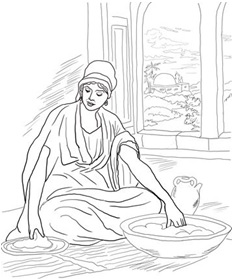
The Parable of the Leaven

Another parable spoke He unto them; The kingdom of heaven is like unto leaven, which a woman took, and hid in three measures of meal, till the whole was leavened. Mat. 13:33 KJV

The kingdom of Heaven here is “like” leaven (sour dough) that is always used in a bad sense in Scripture, as meal is in a good sense. Therefore, the common interpretation of leaven converting the world is the exact opposite of the true interpretation of the leaven corrupting the meal. Note the use of leaven in Scripture:

In the Old Testament leaven is used to portray the evil nature of the sinner: Exodus 12:8, 15-20; 34:25; Levitikus 2:11; 6:17; 10:12 These last three passages refer to leaven being forbidden in certain sacrifices. Only in one sacrifice was it used in Levitikus 7:12-13 and here it signifies that though the believer has made peace with God through the work of another (Christ), there are still human traits and selfishness in him which must be continually purged by growth in grace.

In the New Testament leaven is used in four ways: first, the leaven of the Pharisees which was external religion, legalism, and hypocrisy; Mt. 23:14-28; Lk. 12:1 second, the leaven of the Sadducees, which was skepticism as to the supernatural and the teachings of the Scriptures on resurrection, angels, and spirits; Mt. 22:23-39; Acts 23:8 third, the leaven of the Harridans, which was materialism, a mixture of religion and worldliness, a political religion; Mk. 8:15 fourth, the leaven of both Pharisees and Sadducees as to their evil doctrines and practices. Mt. 16:11-12; 23:14, 16, 23-28

This illustrates how the kingdom of heaven teachings and the program of God in this age would become corrupted by false doctrines and unscriptural programs until the whole is corrupted. Lk. 18:8; 1Tim. 4:1-8; 2Tim. 3:5; 4:3-4; 2Pet. 3:3-4  A woman is a common symbol of evil in the moral or religious sphere and when used figuratively in an evil sense ‘she’ represents wickedness, fallacy, uncleanness, and unfaithfulness, Lam. 1:17 harlotry, Ezek. 16:15,22,26,28-59; 23:1-49; 36:17; Hos. 1:2; 2:2-17; 3:1; Rev. 17 wickedness, Zech. 5:5-11; Rev. 17:5 and false religion. Rev. 17 Thus, in a bad ethical sense a woman always symbolizes something wrong or out of place religiously.  Zech. 5:7-8; Rev. 2:20; 17:1-18  When used in a good sense women represent Israel, cp Gen. 37:9-10 with Rev. 12; Ezek. 16 the two covenants, Gal. 4:21-31 and righteousness and purity. 2Cor. 11:2; Rev. 19:7-8 A meal symbolizes the Word of God. Mt. 4:4; Jn. 6:47-63 and the three hidden measures of the meal illustrates all false teachings, religious programs, and professed Christian lives that seek to hide behind the Word of God (Christ as the Bread of Life and the Word of God Mt. 4:4; Jn. 6:47-63; Jn. 1:1).

The parable illustrates how the kingdom of Heaven would become like leaven, which a woman uses to corrupt Christ and His teachings. Both Christ and the Word of God are being corrupted today by the false church and its teachings. These teachers dominate the realm of profession and use it to deceive people by exalting their own words above the Word of God and their own leaders above Christ; by making the people feel that their church is infallible and that obedience to it and its dogmas is better than obedience to civil governments and by many comparable doctrines contrary to the Bible, thus corrupting the truth through the realm of profession.

Your glorying is not good. Know ye not that a little leaven leaven the whole lump? Purge out therefore the old leaven, that ye may be a new lump, as ye are unleavened. For even Christ our passover is sacrificed for us: Therefore let us keep the feast, not with old leaven, neither with the leaven of malice and wickedness; but with the unleavened bread of sincerity and truth. 1Cor. 5:6-8 KJV

The Parable of Weeds

Another parable put he forth unto them, saying, The kingdom of heaven is likened unto a man which sowed good seed in his field: But while men slept, his enemy came and sowed tares among the wheat, and went his way. But when the blade was sprung up, and brought forth fruit, then appeared the tares also. Mat. 13:24-26 KJV

The sower illustrates the Son of Man (Jesus) Mt. 13:37 and the “good seed” illustrates the true children of the kingdom of Heaven. The field illustrates the world of men and the tares illustrate the professed children of the kingdom who are, in reality, the sons of the devil, who sowed them among the wheat. Mt. 13:25, 38-39 The wheat being in the ground first shows God’s plan concerning the kingdom, that only good shall be in it and that every one who professes to be a child of God should really be one. An enemy – the devil Mt. 13:25,28,39; Lk. 10:19; Acts 13:10 – sowed tares among the wheat, causing a mixture of good and bad in the same field. Thus, the kingdom of Heaven now takes on a new aspect and should rightly be understood as “the sphere of profession, “Christendom,” or “the kingdom of Heaven in mystery.”

It was common in the East for enemies to sow tares and other poisonous seeds in the fields of those they wished to hurt. In India various weeds are sown that take years to get rid of.  The word “tares” – the Greek, zizania, occurs only in Matthew 13:25, 36 is not the same as the darnel of the naturalists, but zewan, as known in Palestine today. While growing it looks like wheat, but when full grown the ears are long and the grain is black. Each grain of the zewan must be removed before grinding the wheat, or the bread is bitter and poisonous. Tares show their true color as they ripen. Verse 26 shows that the tares could not be detected until the fruit began to appear. Mt. 7:15-20

He said unto them, An enemy hath done this. The servants said unto him, Wilt thou then that we go and gather them up? But he said, Nay; lest while ye gather up the tares, ye root up also the wheat with them. Let both grow together until the harvest: and in the time of harvest I will say to the reapers, Gather ye together first the tares, and bind them in bundles to burn them: but gather the wheat into my barn. Mat. 13:27-30 KJV

The tares and the wheat both grow side by side in the same field, which is the will of the householder, until the harvest. Mt. 13:37-40 Both saved and unsaved who profess to be children of the kingdom will mingle together in this world until the end of the age. The harvest illustrates the separation of the wicked among the just at the end of this age when the Messiah comes to reign. Mt. 13:39-43; 25:31-46; 1 Thess. 5:1-11; 2 Thess. 1:7-10; Jude 14; Zech. 14:1-21   The reapers illustrate angels who will separate the wicked from the good when Christ comes. Mt. 13:39-43; 24:31, 51; 25:31-46; 2 Thess. 1:7-10

As therefore the tares are gathered and burned in the fire; so shall it be in the end of this world. The Son of man shall send forth his angels, and they shall gather out of his kingdom all things that offend, and them which do iniquity;  And shall cast them into a furnace of fire: there shall be wailing and gnashing of teeth. Then shall the righteous shine forth as the sun in the kingdom of their Father. Who hath ears to hear, let him hear. Mat. 13:40-43 KJV

The expression of “the end of the world” means “the end of the age.” At this time the kingdom of Heaven ceases to be the sphere of profession and becomes the literal kingdom of Heaven, or the reign of the Messiah over all the kingdoms of this world. Rev. 11:15; Dan. 7:13-14, 18

When the tares are gathered and burned in the fire, refers to the time when the judgment of the nations Mt. 25:31-46; Dan. 7:9 will be executed. The tares will be burned in the same sense the branches of Christ will be if they do not abide in Him. Mt. 8:12; 13:40-43,49-50; 24:31; 25:41,46; Jn. 15:6

The furnace of fire where there shall be wailing and gnashing of teeth is another description of eternal hell, not the grave. Mt. 13:42,50; Rev. 9:2 Wailing, Mt. 13:50 weeping Mt. 8:12; 22:13; 24:51; 25:30; Lk. 13:28 and the gnashing of teeth, picture bitter remorse and pain. The righteous will take over the kingdoms of this world forever Rev. 1:5-7; 5:10; 11:15; 20:4-6; 22:4-5; Mt. 25:31-46; Zech. 14 and they will be luminous like the sun Mt. 19:28; 25:31-46; Rev. 5:10; 20:1-10 and inherit all things. Mt. 5:5; 25:35; Lk. 12:32; Rom. 8:17; Dan. 7:18,22,27; Rev. 21:7

I choose to hear what the Word of God says and will live in obedience so that I can shine forth as the sun in the kingdom of my Heavenly Father! Amen