
Behold, the Lamb of God

John 1:29-34  The next day John see Jesus coming unto him, and saith, Behold the Lamb of God, which taketh away the sin of the world. This is he of whom I said, After me cometh a man which is preferred before me: for he was before me. And I knew him not: but that he should be made manifest to Israel, therefore am I come baptizing with water. And John bare record, saying, I saw the Spirit descending from heaven like a dove, and it abode upon him. And I knew him not: but he that sent me to baptize with water, the same said unto me, Upon whom thou shalt see the Spirit descending, and remaining on him, the same is he which baptize with the Holy Ghost. And I saw, and bare record that this is the Son of God. 

John the Baptist saw Christ and proclaimed “Behold the Lamb of God, which taketh away the sin of the world.” This is the first New Testament prophecy fulfilled in John. Lamb of God is a symbol of Christ, mentioned thirty-two times (Isa. 53:7; John 1:36; Acts 8:32; 1Pet. 1:19; Rev. 5:6-13; 6:1, 16; 7:9-17; 12:11; 13:8; 14:1-10; 15:3; Rev. 17:14; 19:7-9; 21:9-27; 22:1-3). The Greek word for taketh away is airo, which means to bear in the sense of removing sin; doing away with the guilt and punishment (1Pet. 2:24; Psa. 103:12; 1Jn. 3:5). The Greek word for sin is hamartia, which means missing the mark; always in a moral sense – a sin, whether by omission or commission, in thought, word, or deed. Christ came to teach men how to shoot straight – to hit the moral bull’s eye every time (Tit. 2:11-14; 1Jn. 2:1-2, 29; 3:9; 5:1-4, 5:18).

‘For he was before me’ – Christ lived before John as the second person of the Trinity “whose goings forth have been from of old, from everlasting” Micah 5:2 (See also Isa. 9:6-7; Heb. 1:8; Rev. 1:8.) John did not know Jesus, but he did know the Father who sent Jesus (v33). The Greek word for manifest is phaneroo, which means to bring to light. Here, it means to introduce the Messiah to Israel (John 1:11; Matt. 15:24).

John bare record, the Greek word martureo means bearing witness. There was seven witnesses to the Messiah: The Father (John 5:30-38; 8:13-18); the Son (John 5:17-27; 8:14; 18:37); the Holy Spirit (John 15:26; 16:13-15); the written Word (John 1:45; 5:38, 46); Divine works (John 5:17, 36; 10:25; 14:11; 15:24); John the Baptist (John 1:7,32-34; 5:33-35); and the Disciples (John 15:27; 19:35; 21:24).

The Greek word for abode is meno which means abide, dwell, remain. Occurs 41 times in John and only 12 times in the other gospels.

‘He that sent me’ is a clear reference to the Trinity. The Son he did not know; the Father he did know; and the Spirit he saw coming from the Father upon the Son (Matt. 3:16-17; Lk.3:22). The Greek word for see is eidon which means to see; not only the mere act of looking but the actual perception of the object. Thus, not only have the Father and Son been seen with human eyes as separate and distinct persons at the same time and place (Dan. 7:9-14; Acts 7:55; Rev. 5:7; 7:10), but the Holy Spirit as a separate person from both the Father and the Son has been seen.

‘Spirit descending, and remaining on him’ is a fulfilment of Isaiah 11:2; 42:1; 61:1 and recorded in Matthew 3:16-17; Mark 1:10 and Luke 3:22. Christ is the one who baptizes in the Holy Spirit (Matt. 3:11; Lk. 3:16; 24:49; John 7:37-39; 15:16-17, 26; Acts 1:4-8; 11:16).

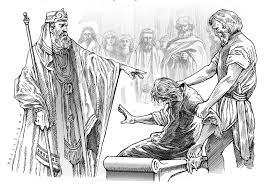
The Testimony of John the Baptist

John 1:19-24  And this is the record of John, when the Jews sent priests and Levites from Jerusalem to ask him, Who art thou? And he confessed, and denied not; but confessed, I am not the Christ. And they asked him, What then? Art thou Elias? And he saith, I am not. Art thou that prophet? And he answered, No. Then said they unto him, Who art thou? that we may give an answer to them that sent us. What say thou of thyself? He said, I am the voice of one crying in the wilderness, Make straight the way of the Lord, as said the prophet Esaias. And they which were sent were of the Pharisees. 

John the Baptist was not the Christ, Elijah, or anyone else who had lived in the past. He was the natural son of Zacharias and Elizabeth (Lk. 1:24, 1:57). He came in the spirit and power of Elijah to do for Israel before the first coming, what Elijah will do before the second coming (Mal. 4:5-6; Lk. 1:17). This explains Matthew 11:14 and 17:10-13.

He was the prophet that Moses predicted would come (Deu. 18:15-18; Acts 3:22-23; 7:37).

‘I am the voice of one crying in the wilderness, make straight the way of the Lord, as said the prophet Esaias’ is the first Old Testament prophecy fulfilled in the gospel of John.

Malachi 3:1 predicted of John “Behold, I will send my messenger, and he shall prepare the way before me: and the Lord, whom you seek, shall suddenly come to his temple, even the messenger of the covenant, whom you delight in: behold, he shall come, saith the LORD of hosts.”

Grace for Grace

John 1:15-18  John bare witness of him, and cried, saying, This was he of whom I spoke, He that come after me is preferred before me: for he was before me. And of his fulness have all we received, and grace for grace. For the law was given by Moses, but grace and truth came by Jesus Christ. No man hath seen God at any time; the only begotten Son, which is in the bosom of the Father, he hath declared him. 

Christ was in existence before John, but after John in public earthly ministry (Matt. 3:11; Lk. 3:17; John 1:31-33) “whose goings forth have been from of old, from everlasting” Micah 5:2 (See also Isa. 9:6-7; Heb. 1:8; Rev. 1:8.)

The Greek word for fullness is pleroma which means abundance, completeness. All needs and lawful wants are promised by the gospel (2Cor. 1:20; Mat. 7:7-11; 17:20; 21:22; Mark 9:23; 11:22-24; John 14:12-17; 15:7, 16; 16:23-26).

Grace upon grace means full grace, according to our needs and wants (Heb. 4:14-16; 10:19-38; Jas. 1:5-8).

The law that condemns in the moral life, and only typifies in the religious life is the law of Moses. First of 13 times Moses is mentioned in John (John 1:17, 45; 3:14; 5:45-46; 6:32; 7:19-23; 8:5; 9:28-29). Grace and truth came by Jesus Christ – this does not mean that there was no law before Moses, or no grace and truth before Jesus Christ. The law itself is truth, and the New Testament is law. There are 1,050 commands in the New Testament. The idea here is that the fullness of grace came by Jesus Christ. One can get today in fullness what men received only in part in Old Testament times.

The Greek word for seen is horao which means to see with the eyes and also see with the mind. That it means here to comprehend fully or understand is clear from the fact that many men have seen God with the eyes (Gen. 18:2, 33; 32:24-30; Exo. 24:10; 33:11; Jos. 5:13; Isa. 6:1-13; Ezek. 1:26-28; Dan. 7:9-14; 10:5-6; Acts 7:56-59; Rev. 4:2-5; 5:1-7). The verse could read, “No man has ever comprehended or experienced God at any time in all His fulness, save the only begotten Son . . . . He hath declared Him.” That Christ is the first to experience God in the fullness of the Holy Spirit is clear from John 3:34; Acts 10:38; Isaiah 11:1-2; 61:1-2 and Luke 4:16-18.

The Greek word for declared is exegeomai which means revealed, expounded; where we get our word exegesis.

Believe on His Name

John 1:12-14  But as many as received him, to them gave he power to become the sons of God, even to them that believe on his name: Which were born, not of blood, nor of the will of the flesh, nor of the will of man, but of God. And the Word was made flesh, and dwelt among us, (and we beheld his glory, the glory as of the only begotten of the Father,) full of grace and truth. 

The gospel benefits only the individual (Mar. 16:16; John 3:16; 6:37) – as many as received him – and to them did He delegated power; the liberty and right to use power. It is the liberty and right for every man to be saved if he wills (1Tim. 2:4; 2Pet. 3:9; Rev. 22:17) for they that believe on His name (Acts 2:21; 3:16; 4:12).

The Greek word for born is gennao which means a bringing forth. A word used of people who are adopted into the family of God (John 3:3; 1Jn. 2:29; 3:9; 5:1, 5:18). It does not mean in either of these uses that a new body, soul, and spirit have come into existence, as when used of Christ who is the only begotten Son of God and the first begotten of Mary (John 1:14, 18; 3:16). Not of blood, that is, not by right of natural descent from man. Not by right of the flesh merely to escape punishment. Not by right of man’s theories and religions, but of God who took man’s place to save him (John 3:16; Rom. 3:20-30; 2Cor. 5:14-21).

Christ was made flesh, not spirit; but man, not God; and earthly, not heavenly. This made Him God’s Son, for sonship in connection with Jesus Christ always refers to humanity, never to deity (Lk. 1:35; Acts 13:33).

Jesus is and was and always will be the only begotten Son of God (John 1:14,18; 3:16, 18; 1Jn. 4:9). Men never will be begotten or born in the same sense as Jesus was (Matt. 1:18-25; Lk. 1:34-35), for their sonship is on a different basis – that of adoption, not an actual begetting and coming into existence (Rom. 8:15; 9:4; Gal. 4:5; Eph. 1:5).

Full of the grace by which we are saved and not an excuse to continue in sin (Rom. 6:1-3; Heb. 10:26-31) and the truth which is the Gospel – the life of Jesus Christ that was set as an example for us to live accordingly (1Pet. 2:21-23).

To Bear Witness

John 1:6-11  There was a man sent from God, whose name was John. The same came for a witness, to bear witness of the Light, that all men through him might believe. He was not that Light, but was sent to bear witness of that Light. That was the true Light, which light every man that come into the world. He was in the world, and the world was made by him, and the world knew him not. He came unto his own, and his own received him not. 

This John refers to John the Baptist, used 20 times in this gospel and never by the title ‘Baptist’ as in the other gospels; he is not to be confused with John the Apostle who is the author of this gospel as well as 1,2,3 John and Revelation. John the Baptist was not the light but came to witness of the Light – the true Light that is Jesus Christ the Messiah (John 8:12; 9:5; 12:35-46) so that men can believe through Him (John 14:6) and be reconciled with the Father.

Jesus Christ became flesh – He came into the world – the same world (earth) He created (Col. 1:15-17) and they (people) knew Him not – most people chose not to have a relationship with God and when Christ came, He did not come as they would have preferred: as a king and to set them free from earthy rulers, but instead He came as a pauper and came to free us of sin, so the people rejected Him. Even His own nation, the Jews (or Israel) through whom He could demonstrate to other nations what God purposed for mankind.

The Word

John 1:1-5 In the beginning was the Word, and the Word was with God, and the Word was God. The same was in the beginning with God. All things were made by him; and without him was not anything made that was made. In him was life; and the life was the light of men. And the light shine in darkness; and the darkness comprehended it not. 

‘In the beginning’ refers to the dateless past (Pro. 8:23) and the Word refers to Christ (John 1:14; Rev. 19:13) and proves His pre-existence (Mic. 5:1-2; Rev. 1:8, 11; 2:8). He is an eternal Being as are also the Father and the Holy Spirit (Ps. 90:1-2; Heb. 9:14). They are the Divine Trinity as described in 1John 5:7. Not only was the Word with God, but He was God and always will be as much divine as the other two members of the Trinity (Isa. 9:6-7; Heb. 1:8-12; Rev. 22:13-16). God created all things by Jesus Christ (Eph. 3:9; Col. 1:15-18; Heb. 1:1-2). Not only were all things created by Him, but redemption of creation is by Him (John 17:2; Col. 1:20). As all creation came by the Son, through the Holy Spirit, so all redemption comes the same way. It was what Christ did on the cross that made it possible for God to redeem through the power of the Holy Spirit (John 3:3-5; Tit. 3:5). When we walk in Christ (1Pet. 2:21-23) who is life and the light of men, we can begin to shine as the light of the world, as a city that is set on a hill that cannot be hid. “Let your light so shine before men, that they may see your good works, and glorify your Father which is in heaven.” (Matt. 5:14-16).

The Greek word for comprehended is katalambano which means to seize upon; to keep down or under; stop; to catch up within the sense of to discover or detect. It means that the satanic powers of darkness (Eph. 6:12) did not overcome the Word, but that the Word spoiled (conquered) them on the cross (Col. 2:14-17). In John 8:12 Jesus states “I am the light of the world: he that follows me shall not walk in darkness, but shall have the light of life.”

Be Doers

James 1:22-25  But be you doers of the word, and not hearers only, deceiving your own selves. For if any be a hearer of the word, and not a doer, he is like unto a man beholding his natural face in a glass: For he behold himself, and go his way, and straightway forget what manner of man he was. But whoso look into the perfect law of liberty, and continue therein, he being not a forgetful hearer, but a doer of the work, this man shall be blessed in his deed. 

Those who ‘do’ the Word of God are those who live in continued obedience to its commands and who doesn’t just ‘hear’ the Word and deceive themselves with their own opinion and false reasoning or interpretation of what they think God actually meant.

He sees his blemishes and imperfections and is moved by what he sees. As long as he sees his deformities, spots, and ugliness he tries to do something about them. But when he turns away from the mirror, he forgets and his imperfections no longer bother him. So it is with the Bible. As long as one studies it, he sees himself as he really is and constantly seeks to improve himself and conform to its teaching. If he gets away from the Bible, a man soon forgets the real picture of himself, “what manner of man he was”.

The perfect law of liberty does not refer to the law of Moses, but to the new covenant, the only perfect law (Heb. 8:6). The law of Moses was imperfect and faulty (Heb. 7:12, 18-19, 22; 8:6-7).

The idea is taken from women spending much time in the mirror decorating themselves to the greatest advantage, not leaving one hair or the smallest ornament out of place. Thus, if one will be as careful to take every advantage of the Word of God to keep his soul saved and his life conformed to the gospel, he will “be blessed in his deed.”

Count It ALL Joy

James 1:2-4  My brethren, count it all joy when you fall into divers temptations; Knowing this, that the trying of your faith work patience. But let patience have her perfect work, that you may be perfect and entire, wanting nothing. 

Be joyful when you are going through a trial since it will produce the right fruit IF you choose to keep on trusting and relying on God (Heb. 11:1) instead of looking at your circumstances and reacting to what you feel or see.  Remember that we are tempted by the enemy to sin against God, thus guard your heart against complaining. Trials test religion and faith and the man who stands true in them proves his religion sound and his faith genuine. Tests work patience and patience works perfection (Jas. 1:12; Rom. 5:3-5; 1Pet. 1:7).

Two blessings come of perfect patience: personal perfection in the knowledge of the gospel and the will of God which will have a direct effect of you being without spot or blemish when you are perfect in your actions and reactions (Mat. 5:48; 2Tim. 3:17); and personal completeness in all graces and gifts of God.

The Parable of the Marriage Feast

And Jesus answered and spake unto them again by parables, and said, The kingdom of heaven is like unto a certain king, which made a marriage for his son, And sent forth his servants to call them that were bidden to the wedding: and they would not come. Again, he sent forth other servants, saying, Tell them which are bidden, Behold, I have prepared my dinner: my oxen and my fatlings are killed, and all things are ready: come unto the marriage. But they made light of it, and went their ways, one to his farm, another to his merchandise: And the remnant took his servants, and entreated them spitefully, and slew them. But when the king heard thereof, he was wroth: and he sent forth his armies, and destroyed those murderers, and burned up their city. Then saith he to his servants, The wedding is ready, but they which were bidden were not worthy. Go ye therefore into the highways, and as many as ye shall find, bid to the marriage. So those servants went out into the highways, and gathered together all as many as they found, both bad and good: and the wedding was furnished with guests. And when the king came in to see the guests, he saw there a man which had not on a wedding garment: And he saith unto him, Friend, how camest thou in hither not having a wedding garment? And he was speechless. Then said the king to the servants, Bind him hand and foot, and take him away, and cast him into outer darkness; there shall be weeping and gnashing of teeth. For many are called, but few are chosen. Mat 22:1-14 KJV

This parable is not to be confused with the parable of the great supper in Luke 14:16-24. Neither of these stories is an illustration of the Marriage Supper of the Lamb of Revelation 19:1-10. These passages are illustrations of the kingdom of Heaven in this age. The certain king making a marriage (marriage feast) for his son illustrates God, who has made possible the blessings of the kingdom and the Gospel to all. Jn. 3:16; Rom. 8:32; 1 Cor. 2:9  The Jews were the first ones invited, but they would not come. Mt. 10:5-7; 15:21-28; Jn. 1:11-13 The occasion for this parable was the rejection of Christ by the Jews. Mt. 21:42-46  The servants sent out were Christ, the apostles, the seventy, and the early ministers of the Church. All went first to Israel, but met with no response, as far as the nation was concerned. They were persecuted and killed until the city was destroyed and Israel was scattered. Mt. 24:2; Lk. 21:20-24; Acts 2:22-24; 7:54-60; 8:1-8; 13:44-49; Rom. 11

All things are ready” 22:4 illustrates the time for the Jews to accept their Messiah and the time for the fulfillment of the promise made to their fathers concerning the kingdom.  “But they made light of it” 22:5; Acts 13:45-49; 18:6; Mt. 23:37-39 The rejection of Jesus by Israel freed God from all responsibility to them in fulfilling His covenants with them, so His program became a worldwide one for all men. Jn. 3:16; Rom. 1:16; 2Cor. 12:13

At the rejection of the Jews by God, because they would not accept the invitation to partake of the blessings, God began to invite all kinds of people, as in the parables in Matthew 13.  The man without the wedding garment illustrates the ones in the kingdom of Heaven in this age, or during their lifetime, who fail to prepare for eternity, or for their place in the literal kingdom of Heaven, when it is set up at the return of Christ. Mt. 18:1-4; Jn. 3:3-8; Rev. 19:7-8 This life is the only time men have to put on that righteousness of the saints in order to get into the real, literal kingdom.  This negligent man was commanded to be put in the same furnace of fire in which the tares, bad fish, and all the wicked were commanded to be put at the end of this age. Mt. 13:37-43, 49-50; 24:51; 25:31-46; Rev. 20:11-15

The central truth which the story illustrates is stated in verse 14.  It is the same truth the parable of the laborers in the vineyard illustrates. “For many are called, but few are chosen,” or “whosoever exalteth himself shall be abased; and he that humbleth himself shall be exalted”. Lk. 14:11; 18:14  The difference in the two parables is that the one story illustrates the importance of humility in service, while this one illustrates the importance of preparation in this life to be chosen of God and accepted when we shall see Him. All are called to salvation, Mt. 11:28; Jn. 3:16; Rev. 22:17 but few will finally be saved. Mt. 7:13-14; Lk. 13:23-30

Jesus was teaching these Jews who desired His life and who rejected Him as their Messiah that they were not worthy of the blessings that He had in store for them, that the Gentiles and individual Jews who accepted the invitation would be blessed with the things that the Jewish nation rejected, and that there must be a preparation made before they would be admitted into the presence of God. The necessary preparation was to put on the wedding garment or change their raiment. It was the custom in the East for royal guests to put on garments provided, else they would be excluded from the feasts. A rejection of the garment provided was taken as an insult and a total disregard for the one who provided the garment. It was an avowal that the guest denied the authority and despised the power of the one providing the raiment. This was exactly true of the Jews who refused the teaching of Christ, which was able to make them wise unto salvation.

I will answer the call by choosing God’s salvation through Jesus Christ; I will not deny the authority or despise the power that is provided, so that I can be prepared and be admitted into the presence of God.

Known By Their Fruit

Wherefore by their fruits ye shall know them. Mat. 7:20 

This is a statement from Jesus Christ Himself. Mt. 7:15-23 There never was a statement made that is truer than this one. It plainly teaches that there are ways whereby all men can know who is right and who is wrong, who is for the truth and who is against it, who is a true Christian and who is not, and who is a true teacher and who is a false one. The ways whereby man can be discerned is “by their fruits” and not by their outward appearance and refinement, which can be so deceptive. A rotten apple may have an attractive coating of wax on the outside and it may be colored with the most beautiful paint, but a bite into it would be a bite into corruption. A most perfect and beautiful fruit tree outwardly will sometimes be so diseased inwardly that it produces the worst kind of fruit. A good tree cannot bring forth corrupt fruit, and a corrupt tree cannot produce good fruit. Every tree brings forth of its own kind whether it is good or bad. So it is with false teachers and those who follow them. Such people can be ever so good outwardly and they may be more refined and correct in life than many true Christians, but this does not prove that they are of God. We all have seen false teachers and rebels against God and the Bible who have been so nice, refined, polite, well-mannered, polished, high toned, and poised until one would think they were gifts from Heaven, but in reality, they were destitute of all truth and spiritual experience and bitter enemies of the Bible.

The heart is deceitful above all things, and desperately wicked: who can know it? I the LORD search the heart, I try the reins, even to give every man according to his ways, and according to the fruit of his doings. Jer. 17:9-10 KJV

We have two facts about the natural heart:

It is deceitful above all things and it is desperately wicked. Then the important question: Who can know it? No one knows how they will react in certain circumstances.  But the Lord searches our hearts and tries the reins, for the purpose of distributing rewards according to the ways and doings of each man.

Bring forth therefore fruits meet for repentance Mat. 3:8 KJV

The nine-fold fruit of the Spirit is for character, not for power as the nine gifts of the Spirit are. Love is the crowning grace of all this fruit and is the impelling force of God in the true exercise of the gifts. A character may be complete with no gift, but it must have all the fruit of the Spirit in order to be Christ-like and normal.  Every element of the fruit of the Spirit should be in every life when one attains to all the fullness of God.  This fruit is expressed in 1 Cor. 13:4-8 as follows: Love suffer long [longsuffering], and is kind [kindness]; love envy not [goodness]; love vaunt not itself, is not puffed up [meekness]; doth not behave itself unseemly [temperance], seek not her own, is not easily provoked, think no evil [meekness]; rejoice not in iniquity, but rejoice in the truth [joy]; bear all things [gentleness], believe all things [faith], hope all things [trust], endure all things [patience and longsuffering]. Love never fail.

But the fruit of the Spirit is love, joy, peace, longsuffering, gentleness, goodness, faith, meekness, temperance: against such there is no law. Gal. 5:22-23 KJV

The Nine-fold Fruit of the Spirit:

  1. LOVE.  Greek: agape (NT:26), divine love. A strong, ardent, tender, compassionate, devotion to the well-being of someone. Let’s have a look at the  Nine Ingredients of Divine Love:
  • Patience – love passive: no hurry; suffers long; bears, believes, hopes, and endures all things 13:4,7
  • Kindness – love in action: never acts rashly or insolently; not inconsistent, puffed up, or proud 13:4
  • Generosity – love in competition: not envious or jealous 13:4
  • Humility – love in hiding: no parade; no airs; works then retires 13:4
  • Courtesy – love in society: does not behave unseemly; always polite; at home with all classes; never rude or discourteous 13:5
  • Unselfishness – love in essence: never selfish, sour, or bitter; seeks only good of others; does not retaliate or seek revenge 13:5
  • Good temper – love in disposition: never irritated; never resentful 13:5
  • Righteousness – love in conduct: hates sin; never glad when others go wrong; always gladdened by goodness to others; always slow to expose; always eager to believe the best; always hopeful, always enduring 13:6-7
  • Sincerity – love in profession: never boastful and conceited; not a hypocrite; always honest; leaves no impression but what is strictly true; never self-assertive; does not blaze out in passionate anger, nor brood over wrongs; always just, joyful, and truthful; knows how to be silent; full of trust; always present
  1. JOY. Greek: chara (NT:5479), the emotional excitement, gladness, delight over blessings received or expected for self and for others.
  2. PEACE. Greek: eirene (NT:1515), the state of quietness, rest, repose, harmony, order, and security in the midst of turmoil, strife, and temptations.
  3. LONGSUFFERING. Greek: makrothumia (NT:3115), patient endurance; to bear long with the frailties, offenses, injuries, and provocations of others, without murmuring, repining, or resentment. 1 Cor. 13:4-7; 2 Cor. 6:4-6; Ephes. 4:1-2; Col. 1:11; 3:12-13; 1 Tim. 1:16; 2 Tim. 3:10; 4:2
  4. GENTLENESS. Greek: chrestotes (NT:5544), a disposition to be gentle, soft-spoken, kind, even-tempered, cultured, and refined in character and conduct. 2 Tim. 2:24-26; Titus 3:1-2; Jas 3:17
  5. GOODNESS. Greek: agathosune (NT:19), the state of being good, kind, virtuous, benevolent, generous, and God-like in life and conduct. Ps. 107:9; Ephes. 5:9; Matt. 5:44-48; Luke 6:27-32
  6. FAITH. Greek: pistis (NT:4102), the living, divinely implanted, acquired, and created principle of inward and wholehearted confidence, assurance, trust, and reliance in God and all that He says.

Faith is not only a natural ability or exercise of a created faculty of man, but it is a fruit of the Spirit and a gift from God. Gal. 5:22-23; 1 Cor. 12:4-11 When man uses his own powers of faith in God and His Word properly he makes contact with God in a supernatural way, and he becomes a partaker of the divine nature. 2 Pet. 1:3-4 He is then free to walk and live in the Spirit, and the fruit of the Spirit will naturally be evident in his life. Gal. 5:16-26 He should constantly add to his faith the virtues of God by yielding to God in daily life. 2 Pet. 1:4-10 This kind of faith becomes a natural fruit of the Spirit and of holy living. It is not an effort to have this faith. It grows in the life of one who is yielding to God and who loves God enough to draw near to God in daily conflict. It is a fruit, not a work. It is a gift, not something we earn by works Rom. 2:4-5; 12:3-11

  1. MEEKNESS. Greek: praotes (NT:4240), the disposition to be gentle, kind, indulgent, even balanced in tempers and passions, and patient in suffering injuries without feeling a spirit of revenge.
  2. TEMPERANCE. Greek: engkrateia (NT:1466), self-control; a moderation in the indulgence of the appetites and passions Prov. 23:1-3; 25:16; Dan. 1:8-16; Rom. 13:14; 1 Cor 9:25-27;  Php. 4:5; 1 Thes. 5:6-8; Titus 2:2-3,11-12; 2 Peter 1:5-10

I therefore choose to crucify my flesh with the affections and lusts; to live and walk in the Spirit.  Gal. 5:24-25 Jesus are the true vine, and our Father is the husbandman. Every branch in Him that bear not fruit, the Father take away: and every branch that bear fruit, He purge it, that it may bring forth more fruit. We are cleaned through the Word which Christ has given unto us, if we abide in Him, and He in us. As the branch cannot bear fruit of itself, except it abide in the vine; no more can we, except if we abide in Him.  Jn. 15:1-4