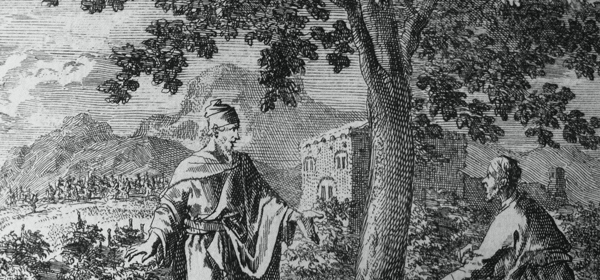
Lay Apart

James 1:21 Wherefore lay apart all filthiness and superfluity of naughtiness, and receive with meekness the engrafted word, which is able to save your souls

So many warnings are written in the Word of what we should not be guilty of or partake in, but so many excuses contradicting God’s Word are still used for those who chose to remain in sin (Rom. 6; 1Jn. 3; 5:18).

We MUST lay apart all moral filthiness and wickedness, impure and unholy affections, baseness, vileness and depravity. Only then can we receive the engrafted Word. It is by the Word of Truth inborn and implanted in the soul that one is saved and begotten (Jas. 1:18; Eph. 5:26). The Word is called seed (1Pet. 1:23; 1Jn. 3:9). When it is implanted in the soul it germinates and springs forth into eternal life. Only the seed that fails to be sown on properly prepared soil and cared for, will fail to bring forth fruit (Matt. 13:3-30).

Be Slow to Speak/Wrath

James 1:19-20 Wherefore, my beloved brethren, let every man be swift to hear, slow to speak, slow to wrath: For the wrath of man worketh not the righteousness of God. 

The wrath of man cannot work the righteousness that God requires. For example, no zeal of doing anything out of anger can be justified before a just God. Therefore, we have been given two ears and one mouth so that we can listen twice as much as we speak.

One of God’s attributes is that He is slow to anger (Psa. 103:8; 145:8; Joel 2:13) and we are warned that a wrathful man stirs up strife: but he that is slow to anger appease strife and that he that is slow to anger is better than the might, and he that rule his spirit than he that takes a city (Pro. 15:18; 16:32). The usage of the tongue is the one thing we are warned of the most in the Word of God and something we should all be sufficiently aware of (See Pro. 18: 7; 20-21; 1Pet. 3:10; Jam. 1:26; 3:1-12).

Begotten by the Word

James 1:17-18 Every good gift and every perfect gift is from above, and cometh down from the Father of lights, with whom is no variableness, neither shadow of turning. Of his own will begat he us with the word of truth, that we should be a kind of firstfruits of his creatures. 

Whatever is good comes from God who never changes; whatever is evil comes from satan and fallen man who are bent on doing whatever gains a selfish and sinful end.

God is the Father of Lights, which refers to Him as the creator of that which give light: the sun, moon and stars, which causes changes in the seasons of the year. But there is no variableness, neither shadow of turning in God, He is always – in every season – the same and does not change like the shadow of a sundial (Heb. 13:8).

It is God’s will that all people be saved – begotten by the Word (John 3:16; 1Tim. 2:4; 2Pet. 3:9). The Word of Truth is one of the agents that make men new creatures (John 3:5; 1Pet. 1:23; Eph. 5:26).

Do Not Err

James 1:13-16 Let no man say when he is tempted, I am tempted of God: for God cannot be tempted with evil, neither tempted he any man: But every man is tempted, when he is drawn away of his own lust, and enticed. Then when lust hath conceived, it brings forth sin: and sin, when it is finished, bring forth death. Do not err, my beloved brethren. 

After using the word temptation in the sense of trial, it is now used in the sense of solicitation to sin. God cannot be tempted with evil, neither does He tempt any man with it. Evil temptations come from evil, not from good. Do not be deceived by supposing that God is the author of sin or that He impels any man to commit it.

Temptation starts with us being tempted in our thoughts of evil, thereafter we are drawn away with strong imagination and lust or delight in viewing whatever we put our minds on. We are being enticed as our wills are weakened and lust conceives as we yield and a sinful act is committed. The result of actual sin is death.

Fade Away

James 1:9-11  Let the brother of low degree rejoice in that he is exalted: But the rich, in that he is made low: because as the flower of the grass he shall pass away. For the sun is no sooner risen with a burning heat, but it withers the grass, and the flower thereof falls and the grace of the fashion of it perish: so also, shall the rich man fade away in his ways. 

A poor Christian must rejoice in his hope of heaven, but the rich one in his humiliation, for both are here only for a short while (Ps. 90:10). Lives burdens are compared with the burning heat of the sun that withers us away as we age.

The rich man who is outside of Christ fades away like a flower. Riches in Scripture are considered the cause of much sin and rebellion against God; and, for this cause, there are many warnings to men, especially converted men, to shun all covetousness of such (Mat. 6:19; Luke 6:24; 12:15-20; 1Tim. 6:9-18).

Ask in Faith

James 1:5-8  If any of you lack wisdom, let him ask of God, that give to all men liberally, and upbraid not; and it shall be given him. But let him ask in faith, nothing wavering. For he that waver is like a wave of the sea driven with the wind and tossed. For let not that man think that he shall receive anything of the Lord. A double-minded man is unstable in all his ways. 

If you need answers, advice or wisdom in any situation: ask God! Don’t be as quick to turn to others for council (Ps. 1:1) or to operate from your own understanding (Pro. 3:7; 26:12). Pray to the Father who gives to all men liberally (Mat. 7:7-11) without finding fault, in the name of Jesus by the Holy Spirit, having a full understanding of your rights and privileges (Jam. 4:3-4) in harmony with the Word (John 14:13), ask in faith, nothing doubting (Heb. 11:6), with praise for the answer (Php. 4:6).

He who doubts is like a wave that is rising one moment, sinking the next. One minute he believes; another he does not. He says yes and then no to what God has promised, never making up his mind which way he believes. He staggers like a drunken man, helpless in prayer. It is as certain that a doubtful man will not get an answer as it is that the man of faith will get an answer. The term ‘double-minded’ was used by the Jews of a man who attempted to worship God and still loved the creature; who wished to secure both worlds. He would not give up the world here and yet was loathe to give up heaven: one torn between carnal and spiritual things.

Count It ALL Joy

James 1:2-4  My brethren, count it all joy when you fall into divers temptations; Knowing this, that the trying of your faith work patience. But let patience have her perfect work, that you may be perfect and entire, wanting nothing. 

Be joyful when you are going through a trial since it will produce the right fruit IF you choose to keep on trusting and relying on God (Heb. 11:1) instead of looking at your circumstances and reacting to what you feel or see.  Remember that we are tempted by the enemy to sin against God, thus guard your heart against complaining. Trials test religion and faith and the man who stands true in them proves his religion sound and his faith genuine. Tests work patience and patience works perfection (Jas. 1:12; Rom. 5:3-5; 1Pet. 1:7).

Two blessings come of perfect patience: personal perfection in the knowledge of the gospel and the will of God which will have a direct effect of you being without spot or blemish when you are perfect in your actions and reactions (Mat. 5:48; 2Tim. 3:17); and personal completeness in all graces and gifts of God.

The Parable of the Pounds

And as they heard these things, he added and spake a parable, because he was nigh to Jerusalem, and because they thought that the kingdom of God should immediately appear. He said therefore, A certain nobleman went into a far country to receive for himself a kingdom, and to return.  And he called his ten servants, and delivered them ten pounds, and said unto them, Occupy till I come.  But his citizens hated him, and sent a message after him, saying, We will not have this man to reign over us. And it came to pass, that when he was returned, having received the kingdom, then he commanded these servants to be called unto him, to whom he had given the money, that he might know how much every man had gained by trading.  Then came the first, saying, Lord, thy pound hath gained ten pounds.  And he said unto him, Well, thou good servant: because thou hast been faithful in a very little, have thou authority over ten cities. And the second came, saying, Lord, thy pound hath gained five pounds. And he said likewise to him, Be thou also over five cities. And another came, saying, Lord, behold, here is thy pound, which I have kept laid up in a napkin: For I feared thee, because thou art an austere man: thou takest up that thou layedst not down, and reapest that thou didst not sow. And he saith unto him, Out of thine own mouth will I judge thee, thou wicked servant. Thou knewest that I was an austere man, taking up that I laid not down, and reaping that I did not sow: Wherefore then gavest not thou my money into the bank, that at my coming I might have required mine own with usury? And he said unto them that stood by, Take from him the pound, and give it to him that hath ten pounds.  (And they said unto him, Lord, he hath ten pounds.) For I say unto you, That unto every one which hath shall be given; and from him that hath not, even that he hath shall be taken away from him.  But those mine enemies, which would not that I should reign over them, bring hither, and slay them before me.  Luk. 19:11-27 KJV

The story actually fits the experience of Herod who left Jericho to go to Rome to obtain the kingdom of Judea (Josephus, Antiquities, 14:9-15; 17:3-4; 18:7,21), facts of which were well known. Whether this is what Jesus used is not stated, but there is no doubt that all of Christ’s illustrations were true happenings of life that His hearers knew about or would recognize as factual and true.

This parable illustrates the postponement of the kingdom of God, or literally the “Kingdom of Heaven” aspect of the kingdom of God. Jesus offered Himself as the King of the Jews and had announced the kingdom of Heaven was at hand. Mt. 4:17 He was rejected by the Jews; so it became necessary to postpone the kingdom until His Second Coming. Mt. 11:20-24; 23:37-39; 27:25

The other point illustrated beside the postponement of the kingdom of God is that of the action of the servants and citizens. In the parable the servants would be the king’s personal attendants and the citizens the subjects of the king. As applied to the kingdom of God, the servants would be the ministers and true believers who are to propagate the gospel of the kingdom, and the citizens would be the Jews who rejected Christ and the gospel. Jn. 1:11; 15:18-25; Mt. 27:21-25

The occasion of this parable of the pounds was that some thought Christ would immediately set up His kingdom. Lk. 19:11 The nobleman illustrates Christ, who was going into a far country to receive for Himself a kingdom and to return. Lk. 19:12; Dan. 7:13-14  The nobleman giving pounds to his servants, saying, “Occupy till I come,” illustrates the responsibility Christ places upon His servants until His Second Coming. Lk. 19:13; Mt. 16:28; 28:19-20  The subjects of the nobleman rejecting him illustrates the rejection of Christ by the Jews. Lk. 19:14; Mt. 23:37-39; 27:25  The nobleman returning with power to reign illustrates Christ’s return in glory to set up His kingdom and deal with His enemies. Lk. 19:15, 27; Mt. 24:37-51; 25:31-46

The judgment of the servants by the nobleman illustrates Christ’s judging and rewarding His servants at the Second Coming. Some servants are going to have greater authority in the kingdom of Heaven than others, and this will be determined upon the basis of faithfulness and work accomplished for God. Lk. 19:15-19; Mt. 16:28; 25:31-46

A pound is equal to 100 drachme, or $65 each for the ten servants. “Thy pound hath gained five pounds” The $65 had gained $325, so the servant was given authority over 5 cities. “Thy pound hath gained ten pounds” The $65 had gained $650. This showed much ability, so he was given authority over ten cities.

The rejection of the servant that did not gain anything for his lord illustrates the rejection of the wicked and slothful servants. Lk. 19:20-25; Mt. 24:37-51 “Thy pound, which I have kept laid up in a napkin” A handkerchief, or sweat cloth is used here and this man lost out through fear of consequences should he lose the money in seeking to gain more. He was not worthy of further trust.

The pound taken from the wicked servant and given to a faithful servant illustrates the law of increase – that which is used increases. Lk. 19:26; 6:38; 2 Cor. 9:6-10

“That unto every one which hath shall be given; and from him that hath not, even that he hath shall be taken away from him” In the East it was a custom to give presents to the rich, but a poor man received none and was an easy victim of others to take what little he had. This is spoken by the nobleman of Luke 19:12, which is the same principle as that of Jesus in Matthew 13:12; Mark 4:25; Luke 8:18. It illustrates that worthy ones will be rewarded and others will not. Mt. 16:27; 25:29; 2Cor. 5:9-10

“Mine enemies, which would not that I should reign over them, bring hither, and slay them before me” The nobleman Lk. 19:12 is still speaking, but it illustrates that Christ will also come again and will set up a kingdom and punish His enemies. Mt. 25:31-46; 2Th. 1:7-10; Jude 1:14; Rev. 19:11-21; Zech. 14

May I be found true, tried and trusted and always represent my God in a manner that will allow others to also want to follow Him.

The Parable of the Householder

Hear another parable: There was a certain householder, which planted a vineyard, and hedged it round about, and digged a winepress in it, and built a tower, and let it out to husbandmen, and went into a far country:  And when the time of the fruit drew near, he sent his servants to the husbandmen, that they might receive the fruits of it.  And the husbandmen took his servants, and beat one, and killed another, and stoned another.  Again, he sent other servants more than the first: and they did unto them likewise.  But last of all he sent unto them his son, saying, They will reverence my son.  But when the husbandmen saw the son, they said among themselves, This is the heir; come, let us kill him, and let us seize on his inheritance.  And they caught him, and cast him out of the vineyard, and slew him.  When the lord therefore of the vineyard cometh, what will he do unto those husbandmen?  They say unto him, He will miserably destroy those wicked men, and will let out his vineyard unto other husbandmen, which shall render him the fruits in their seasons.  Jesus saith unto them, Did ye never read in the scriptures, The stone which the builders rejected, the same is become the head of the corner: this is the Lord’s doing, and it is marvellous in our eyes?  Therefore say I unto you, The kingdom of God shall be taken from you, and given to a nation bringing forth the fruits thereof. And whosoever shall fall on this stone shall be broken: but on whomsoever it shall fall, it will grind him to powder.nAnd when the chief priests and Pharisees had heard his parables, they perceived that he spake of them. But when they sought to lay hands on him, they feared the multitude, because they took him for a prophet. Mat 21:33-46 KJV

The householder illustrates God the Father, who sent His Son into the world to redeem mankind. Mt. 21:37; Jn. 3:16; 15:1  The vineyard illustrates the kingdom of Heaven part of the kingdom of God, which was intrusted to the Jews, planted by God with the rich and fruitful vines of the knowledge of God, His commandments, the institutions of religion, and His revealed Word. Mt. 21:43; Mk. 12:1-9; Lk. 20:9-19; Rom. 3:1-2; 9:1-5 The hedge illustrates God’s watchful care and provision for the protection of the kingdom, so that it would be free from the intrusion of wild beasts which would spoil the vines and destroy the fruit. The winepress illustrates all the institutions and means of blessing for the human race. Winepresses were hewn out of solid rock. They usually consisted of two or three vats, each a little higher than the other, with troughs from one to the other. The grapes were put in the top vat, which was always the biggest, and two or more persons with naked feet and legs would jump up and down, crushing the grapes. The juice flowed into the next vat and from it would be drawn off into the next, or into vessels, leaving the dregs in the vats. The tower illustrates the place of dwelling where the workers of the vineyard could find rest and recreation and a place to store the fruit. These towers in literal vineyards were sometimes forty to fifty feet high, affording a place for the watchman to see the vineyard and protect it.

The husbandmen illustrate Israel who had charge of the vineyard to render unto the householder the fruit in due season. Mt. 21:45-46 There were two kinds of leases that could be had in the East. The tenant paid a money rent to the proprietor, or else he agreed to give the owner a definite amount of the produce, whether the harvest had been good or bad. Such leases were given by the year or for life; sometimes the lease was even hereditary, passing from father to son. The latter kind of lease is no doubt referred to in this parable.

The householder going away illustrates the long period that God permitted the nation to be ruled under the guidance of kings and prophets through the law. Acts 13:17-43  The time of the fruit illustrates the seasons that God expected results from the Jews in extending the kingdom among other nations and doing those things required to bring the knowledge of God to others.

The servants illustrate the Old Testament prophets, priests, and teachers whom God sent to get the Jews to render to Him the fruit of the kingdom. Mt. 23:37-39; Heb. 11:32-40  The son of the householder illustrates the Son of God, who was sent to the lost sheep of Israel. Mt. 10:6; 23:37-39; Jn. 1:11; 3:16; Acts 2:22-36  The maltreatment of the servants and the son illustrates the bitter hatreds and backslidings of Israel against God from the time in Egypt to the crucifixion of Christ. This is plainly recorded in 1 Ki. 18:13; 22:24-27; 2 Ki. 6:31; 21:16; 2 Chron. 24:19-22; 36:16; Jer. 37:1–38:28; Mt. 23:37-39; Acts 7:52; Heb. 11:36; Lk. 4:29; Jn. 8:37, 59; 10:31-39; 19:14-30.

The scheme of the husbandmen to seize the inheritance illustrates the reason for their rejection of the Messiah. They sinned against light. If Jesus was the Messiah and if He was introducing the kingdom of God, the whole spirit of which was different from theirs, then they would lose their places as rulers, as teachers, as men of influence, as well as their authority over the people and their chief business. They were so connected with a system and with wrong ideas, principles, and customs, which must pass away with the reign of the Messiah, that if Christ prevailed they must fall. They imagined that if they could destroy Christ, they could continue in their possession of the inheritance. They killed that they might possess, but killing was the shortest road to entire loss. Every possible method of leading them to right conduct had been exhausted; so judgment must fall. They pronounced their own judgment. Mt. 21:40-41 The destruction of the husbandmen refers to the cutting off of Israel and the destruction of their city and nation. Mt. 23:37-39; 24:2; Lk. 21:20-24; Acts 13:44-49; 18:6; Rom. 11:1-33

The central truths illustrated are stated in Mat. 21:42-44. The Jews at last saw the application of the parable and immediately went out unconsciously to fulfill it. There are three main truths illustrated by this story:

  • The stone which the builders rejected, the same is become the head of the corner. 21:42; Ps. 118:22-23; Acts 4:11; 1 Pet. 2:7 The cornerstone on which the superstructure rested was the most important stone in the building. The primary meaning in the Psalm about the rejected stone was taken from the great cornerstone that the builders of Solomon’s Temple left out because they did not understand the head architect’s plans. Afterward this stone was found to be that on which the completeness of the structure depended – on which the two walls met and were bonded together. The Messiah of these Jews was compared to this stone. Christ warned them not to make the same mistake that the builders of the Temple had made.
  • The kingdom of God shall be taken from you and given to a nation bringing forth the fruits thereof. 21:43 This refers to the cutting off of Israel from being the ministers and people of God to carry out God’s purpose of evangelizing the world. Acts 13:44-52; 18:6; Rom. 11:1-33 The Gentiles have been the propagators of the Gospel throughout this Age of Grace.
  •  Whosoever shall fall on this stone shall be broken: but on whomsoever it shall fall, it will grind him to powder  Mt. 21:44 This saying means that the individual who humbles himself and falls on the stone for mercy shall receive mercy and shall become broken in heart and spirit, Isa. 57:15; 66:1-2; Ps. 34:18; Mt. 5:3-7 but if he hardens himself against God, he shall receive judgment without mercy. The stone in this verse is the same as in verse 42. It refers to Christ, who is pictured as a stone in Scripture, in a threefold way:
  1. To Israel – He is pictured as a stumbling stone and a rock of offence, because He came as a lowly servant instead of a great world-monarch 8:14; Rom. 9:32-33; 1 Cor. 1:23; 1 Pet. 2:8
  2. To the Church – He is pictured as a foundation stone and the head of the corner 1 Cor. 3:11; 2:20-22; 1 Pet. 2:4-5
  3. To the nations – He is pictured as a smiting stone of destruction 2:34, 44-45; Lk. 21:24; Rev. 16:14; 19:11-21

Israel stumbled over Christ; the Church is built upon Christ; and the nations will be broken by Christ.


The Parable of the Net

Again, the kingdom of heaven is like unto a net, that was cast into the sea, and gathered of every kind:  Which, when it was full, they drew to shore, and sat down, and gathered the good into vessels, but cast the bad away. Mat. 13:47-48 KJV

The net illustrates the kingdom of Heaven or realm of profession gathering both good and bad from the sea of humanity. The good and bad remain in the net until the end of the age, when they are separated. This parable shows that not all in the kingdom of Heaven will be converted, much less the whole world, as taught by many.

So shall it be at the end of the world: the angels shall come forth, and sever the wicked from among the just, And shall cast them into the furnace of fire: there shall be wailing and gnashing of teeth. Mat. 13:49-50 KJV

The separation of the evil ones from the good ones takes place at the end of the age, as in the parable of the tares and the wheat. Mt. 13:30, 40, 43, 49-50 The destiny of both classes in both parables is the same.

The parable of the tares and wheat teaches a mixture of good and bad, as well as the purpose and origin of the bad, while this parable teaches that this mixture will continue until the end and that the enemy who caused the bad would be defeated and that the bad will be cast away. The main truth illustrated by this parable is the universal aspect of the sphere of profession. Wherever the net is cast it gathers both classes of people regardless of who they are or what they may be in life and conduct.