The Son of God and of Man

John 1:49-51  Nathanael answered and saith unto him, Rabbi, thou art the Son of God; thou art the King of Israel. Jesus answered and said unto him, Because I said unto thee, I saw thee under the fig tree, believe thou? thou shalt see greater things than these. And he saith unto him, Verily, verily, I say unto you, Hereafter you shall see heaven open, and the angels of God ascending and descending upon the Son of man. 

The second New Testament prophecy fulfilled in John – thou shall see greater things than these – Nathaniel did see many greater works when he saw all the works of Christ for over three years. John 1:51 is to be fulfilled in the eternal kingdom of Jesus on earth when angels will ascend and descend in a more literal way than now (Matt. 13:41-43; 24:31).

Verily, verily means Surely, surely or Amen, amen. So used for emphasis, and only by Him who is the truth (John 14:6). Always used singly elsewhere: in the Old Testament only 16 times; 30 times in Matthew; 15 times in Mark; and 8 times in Luke and only by Christ.

The Son of man is used 88 times of Christ in the New Testament and once in Daniel 7:13 where it was predicted that He would come as the Son of man. It always has the definite article when used of Christ, but not when used of ordinary men. He, Jesus, is God’s Man to redeem mankind. He is God’s answer to satan to guarantee his defeat and restore man’s original dominion.

Calling of Philip and Nathanael

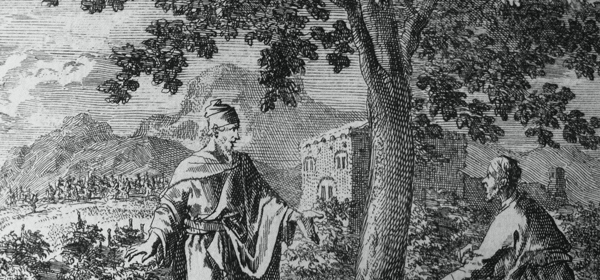
John 1:43-48  The day following Jesus would go forth into Galilee, and find Philip, and saith unto him, Follow me. Now Philip was of Bethsaida, the city of Andrew and Peter. Philip find Nathanael, and saith unto him, We have found him, of whom Moses in the law, and the prophets, did write, Jesus of Nazareth, the son of Joseph. And Nathanael said unto him, Can there any good thing come out of Nazareth? Philip saith unto him, Come and see. Jesus saw Nathanael coming to him, and saith of him, Behold an Israelite indeed, in whom is no guile! Nathanael saith unto him, Whence know thou me? Jesus answered and said unto him, Before that Philip called thee, when thou was under the fig tree, I saw thee. 

Philip was one of the twelve apostles (Matt. 10:3; Mar. 3:18; Lk. 6:14; Acts 1:13), a brother of Nathanael, who brings him also to Jesus. Nathanael (means gift of God) is Bartholomew, which is a patronymic of Nathaniel, also one of the twelve.

The question he asked “can there any good thing come out of Nazareth?” was because they were expecting the Messiah from Bethlehem, and not Nazareth. Never a better person came from any place on earth than Jesus Christ!

Jesus knew Nathanael’s heart through the Holy Spirit’s gift of knowledge (John 3:34; 1Cor. 12:4-11) and said that he was an Israelite in whom is no guile – he was without deceit.

Christ’s statement of seeing him by the Spirit before He could see him with His eyes convinced Nathaniel of Christ’s Sonship.

Calling of the First Disciples

John 1:35-42  Again the next day after John stood, and two of his disciples; And looking upon Jesus as he walked, he saith, Behold the Lamb of God! And the two disciples heard him speak, and they followed Jesus. Then Jesus turned, and saw them following, and saith unto them, What seek you? They said unto him, Rabbi, (which is to say, being interpreted, Master,) where dwell thou? He saith unto them, Come and see. They came and saw where he dwelt, and abode with him that day: for it was about the tenth hour. One of the two which heard John speak, and followed him, was Andrew, Simon Peter’s brother. He first finds his own brother Simon, and saith unto him, We have found the Messias, which is, being interpreted, the Christ. And he brought him to Jesus. And when Jesus beheld him, he said, Thou art Simon the son of Jona: thou shalt be called Cephas, which is by interpretation, A stone. 

Two of John the Baptist’s disciples, the one was Andrew (Peter’s brother), the other probably John the Apostle, as he never mentions himself in this book. They looked upon (Jesus) the Greek word emblepo, which means to look with fixed eyes upon or look intently as they heard John the Baptist say: “Behold the Lamb of God!” A symbol of Christ used thirty-two times in the Bible.

Andrew and John asked Jesus “Rabbi, (which means Master) where dwell thou?” Jesus told them, “Come and see.” So, they came and saw where He stayed and stayed with Him for that day because it was already the tenth hour – 4 pm.

‘found the Messias’ Finding Jesus changes one’s life (2Cor. 5:17-18). Messias is the Greek transliteration of the Hebrew Mashiyach, meaning anointed (John 4:25; 1Sam. 2:10, 35; Psa. 2:2; Dan. 9:25-26). The equivalent of mashiyach in the Greek is Christos, used of Jesus 569 times in the New Testament.

‘Cephas’ is the Aramaic word for stone (1Cor. 1:12; 3:22; 9:5; 15:5; Gal. 2:9). And ‘stone’ is the Greek word petros which means little stone, rock and 161 other places translated “Peter”. This shows how Jesus could judge a man at the first look. He knew Peter to be firm and strong in soul, and hard and unyielding in purpose.

Conversion

James 5:17-20  Elias was a man subject to like passions as we are, and he prayed earnestly that it might not rain: and it rained not on the earth by the space of three years and six months. And he prayed again, and the heaven gave rain, and the earth brought forth her fruit. Brethren, if any of you do err from the truth, and one convert him; Let him know, that he which convert the sinner from the error of his way shall save a soul from death, and shall hide a multitude of sins. 

Elijah – Elias’s case is given to show that all men are alike in constitution and to encourage others to pray even for miracles (1Kin. 17:1; 18:1, 41-46).

“Brethren, if any of you do err from the truth…” here seven facts are given about backsliders: It is possible for brethren or Christians to err from the truth and become unconverted (see Peter as an example in Luke 22:32). An erring Christian can be converted again. An erring Christian becomes a sinner again, if he sins (Rom. 6:14-23). An erring Christian incurs the death penalty again when he sins (Ezek. 18:24; Rom. 8:12-13; Gal. 5:19-21). If the erring Christian is saved from his error, his soul will be saved again from death (1Jn. 1:9; 5:16; Rev. 2:5). If he repents and is saved again from death, his sins will be forgiven and hidden. If he does not repent, he will be lost and will have to pay the penalty for sin (2Tim. 2:12; Heb. 6:4-6,10:26-29, 2Pet. 2:20-21).

Conversion means a change of direction, a new walk with God and is explained in Acts 3:19 “Repent you therefore, and be converted, that your sins may be blotted out, when the times of refreshing shall come from the presence of the Lord,” thus for us to convert a sinner is to get someone to turn back to God, to change direction, and to walk anew with Him. It is not, however, to save others from their sins, for that is Christ Jesus’ salvation work as our Saviour (Rom. 1:16; Php. 1:28-29; 1Thes. 5:9; Heb. 9:28; 1Pet. 1:10-11).

The Parable of the Pounds

And as they heard these things, he added and spake a parable, because he was nigh to Jerusalem, and because they thought that the kingdom of God should immediately appear. He said therefore, A certain nobleman went into a far country to receive for himself a kingdom, and to return.  And he called his ten servants, and delivered them ten pounds, and said unto them, Occupy till I come.  But his citizens hated him, and sent a message after him, saying, We will not have this man to reign over us. And it came to pass, that when he was returned, having received the kingdom, then he commanded these servants to be called unto him, to whom he had given the money, that he might know how much every man had gained by trading.  Then came the first, saying, Lord, thy pound hath gained ten pounds.  And he said unto him, Well, thou good servant: because thou hast been faithful in a very little, have thou authority over ten cities. And the second came, saying, Lord, thy pound hath gained five pounds. And he said likewise to him, Be thou also over five cities. And another came, saying, Lord, behold, here is thy pound, which I have kept laid up in a napkin: For I feared thee, because thou art an austere man: thou takest up that thou layedst not down, and reapest that thou didst not sow. And he saith unto him, Out of thine own mouth will I judge thee, thou wicked servant. Thou knewest that I was an austere man, taking up that I laid not down, and reaping that I did not sow: Wherefore then gavest not thou my money into the bank, that at my coming I might have required mine own with usury? And he said unto them that stood by, Take from him the pound, and give it to him that hath ten pounds.  (And they said unto him, Lord, he hath ten pounds.) For I say unto you, That unto every one which hath shall be given; and from him that hath not, even that he hath shall be taken away from him.  But those mine enemies, which would not that I should reign over them, bring hither, and slay them before me.  Luk. 19:11-27 KJV

The story actually fits the experience of Herod who left Jericho to go to Rome to obtain the kingdom of Judea (Josephus, Antiquities, 14:9-15; 17:3-4; 18:7,21), facts of which were well known. Whether this is what Jesus used is not stated, but there is no doubt that all of Christ’s illustrations were true happenings of life that His hearers knew about or would recognize as factual and true.

This parable illustrates the postponement of the kingdom of God, or literally the “Kingdom of Heaven” aspect of the kingdom of God. Jesus offered Himself as the King of the Jews and had announced the kingdom of Heaven was at hand. Mt. 4:17 He was rejected by the Jews; so it became necessary to postpone the kingdom until His Second Coming. Mt. 11:20-24; 23:37-39; 27:25

The other point illustrated beside the postponement of the kingdom of God is that of the action of the servants and citizens. In the parable the servants would be the king’s personal attendants and the citizens the subjects of the king. As applied to the kingdom of God, the servants would be the ministers and true believers who are to propagate the gospel of the kingdom, and the citizens would be the Jews who rejected Christ and the gospel. Jn. 1:11; 15:18-25; Mt. 27:21-25

The occasion of this parable of the pounds was that some thought Christ would immediately set up His kingdom. Lk. 19:11 The nobleman illustrates Christ, who was going into a far country to receive for Himself a kingdom and to return. Lk. 19:12; Dan. 7:13-14  The nobleman giving pounds to his servants, saying, “Occupy till I come,” illustrates the responsibility Christ places upon His servants until His Second Coming. Lk. 19:13; Mt. 16:28; 28:19-20  The subjects of the nobleman rejecting him illustrates the rejection of Christ by the Jews. Lk. 19:14; Mt. 23:37-39; 27:25  The nobleman returning with power to reign illustrates Christ’s return in glory to set up His kingdom and deal with His enemies. Lk. 19:15, 27; Mt. 24:37-51; 25:31-46

The judgment of the servants by the nobleman illustrates Christ’s judging and rewarding His servants at the Second Coming. Some servants are going to have greater authority in the kingdom of Heaven than others, and this will be determined upon the basis of faithfulness and work accomplished for God. Lk. 19:15-19; Mt. 16:28; 25:31-46

A pound is equal to 100 drachme, or $65 each for the ten servants. “Thy pound hath gained five pounds” The $65 had gained $325, so the servant was given authority over 5 cities. “Thy pound hath gained ten poundsThe $65 had gained $650. This showed much ability, so he was given authority over ten cities.

The rejection of the servant that did not gain anything for his lord illustrates the rejection of the wicked and slothful servants. Lk. 19:20-25; Mt. 24:37-51 “Thy pound, which I have kept laid up in a napkinA handkerchief, or sweat cloth is used here and this man lost out through fear of consequences should he lose the money in seeking to gain more. He was not worthy of further trust.

The pound taken from the wicked servant and given to a faithful servant illustrates the law of increase – that which is used increases. Lk. 19:26; 6:38; 2 Cor. 9:6-10

That unto every one which hath shall be given; and from him that hath not, even that he hath shall be taken away from him” In the East it was a custom to give presents to the rich, but a poor man received none and was an easy victim of others to take what little he had. This is spoken by the nobleman of Luke 19:12, which is the same principle as that of Jesus in Matthew 13:12; Mark 4:25; Luke 8:18. It illustrates that worthy ones will be rewarded and others will not. Mt. 16:27; 25:29; 2Cor. 5:9-10

“Mine enemies, which would not that I should reign over them, bring hither, and slay them before me” The nobleman Lk. 19:12 is still speaking, but it illustrates that Christ will also come again and will set up a kingdom and punish His enemies. Mt. 25:31-46; 2Th. 1:7-10; Jude 1:14; Rev. 19:11-21; Zech. 14

May I be found true, tried and trusted and always represent my God in a manner that will allow others to also want to follow Him.

The Parable of the Marriage Feast

And Jesus answered and spake unto them again by parables, and said, The kingdom of heaven is like unto a certain king, which made a marriage for his son, And sent forth his servants to call them that were bidden to the wedding: and they would not come. Again, he sent forth other servants, saying, Tell them which are bidden, Behold, I have prepared my dinner: my oxen and my fatlings are killed, and all things are ready: come unto the marriage. But they made light of it, and went their ways, one to his farm, another to his merchandise: And the remnant took his servants, and entreated them spitefully, and slew them. But when the king heard thereof, he was wroth: and he sent forth his armies, and destroyed those murderers, and burned up their city. Then saith he to his servants, The wedding is ready, but they which were bidden were not worthy. Go ye therefore into the highways, and as many as ye shall find, bid to the marriage. So those servants went out into the highways, and gathered together all as many as they found, both bad and good: and the wedding was furnished with guests. And when the king came in to see the guests, he saw there a man which had not on a wedding garment: And he saith unto him, Friend, how camest thou in hither not having a wedding garment? And he was speechless. Then said the king to the servants, Bind him hand and foot, and take him away, and cast him into outer darkness; there shall be weeping and gnashing of teeth. For many are called, but few are chosen. Mat 22:1-14 KJV

This parable is not to be confused with the parable of the great supper in Luke 14:16-24. Neither of these stories is an illustration of the Marriage Supper of the Lamb of Revelation 19:1-10. These passages are illustrations of the kingdom of Heaven in this age. The certain king making a marriage (marriage feast) for his son illustrates God, who has made possible the blessings of the kingdom and the Gospel to all. Jn. 3:16; Rom. 8:32; 1 Cor. 2:9  The Jews were the first ones invited, but they would not come. Mt. 10:5-7; 15:21-28; Jn. 1:11-13 The occasion for this parable was the rejection of Christ by the Jews. Mt. 21:42-46  The servants sent out were Christ, the apostles, the seventy, and the early ministers of the Church. All went first to Israel, but met with no response, as far as the nation was concerned. They were persecuted and killed until the city was destroyed and Israel was scattered. Mt. 24:2; Lk. 21:20-24; Acts 2:22-24; 7:54-60; 8:1-8; 13:44-49; Rom. 11

All things are ready” 22:4 illustrates the time for the Jews to accept their Messiah and the time for the fulfillment of the promise made to their fathers concerning the kingdom.  “But they made light of it” 22:5; Acts 13:45-49; 18:6; Mt. 23:37-39 The rejection of Jesus by Israel freed God from all responsibility to them in fulfilling His covenants with them, so His program became a worldwide one for all men. Jn. 3:16; Rom. 1:16; 2Cor. 12:13

At the rejection of the Jews by God, because they would not accept the invitation to partake of the blessings, God began to invite all kinds of people, as in the parables in Matthew 13.  The man without the wedding garment illustrates the ones in the kingdom of Heaven in this age, or during their lifetime, who fail to prepare for eternity, or for their place in the literal kingdom of Heaven, when it is set up at the return of Christ. Mt. 18:1-4; Jn. 3:3-8; Rev. 19:7-8 This life is the only time men have to put on that righteousness of the saints in order to get into the real, literal kingdom.  This negligent man was commanded to be put in the same furnace of fire in which the tares, bad fish, and all the wicked were commanded to be put at the end of this age. Mt. 13:37-43, 49-50; 24:51; 25:31-46; Rev. 20:11-15

The central truth which the story illustrates is stated in verse 14.  It is the same truth the parable of the laborers in the vineyard illustrates. “For many are called, but few are chosen,” or “whosoever exalteth himself shall be abased; and he that humbleth himself shall be exalted”. Lk. 14:11; 18:14  The difference in the two parables is that the one story illustrates the importance of humility in service, while this one illustrates the importance of preparation in this life to be chosen of God and accepted when we shall see Him. All are called to salvation, Mt. 11:28; Jn. 3:16; Rev. 22:17 but few will finally be saved. Mt. 7:13-14; Lk. 13:23-30

Jesus was teaching these Jews who desired His life and who rejected Him as their Messiah that they were not worthy of the blessings that He had in store for them, that the Gentiles and individual Jews who accepted the invitation would be blessed with the things that the Jewish nation rejected, and that there must be a preparation made before they would be admitted into the presence of God. The necessary preparation was to put on the wedding garment or change their raiment. It was the custom in the East for royal guests to put on garments provided, else they would be excluded from the feasts. A rejection of the garment provided was taken as an insult and a total disregard for the one who provided the garment. It was an avowal that the guest denied the authority and despised the power of the one providing the raiment. This was exactly true of the Jews who refused the teaching of Christ, which was able to make them wise unto salvation.

I will answer the call by choosing God’s salvation through Jesus Christ; I will not deny the authority or despise the power that is provided, so that I can be prepared and be admitted into the presence of God.

The Parable of the Householder

Hear another parable: There was a certain householder, which planted a vineyard, and hedged it round about, and digged a winepress in it, and built a tower, and let it out to husbandmen, and went into a far country:  And when the time of the fruit drew near, he sent his servants to the husbandmen, that they might receive the fruits of it.  And the husbandmen took his servants, and beat one, and killed another, and stoned another.  Again, he sent other servants more than the first: and they did unto them likewise.  But last of all he sent unto them his son, saying, They will reverence my son.  But when the husbandmen saw the son, they said among themselves, This is the heir; come, let us kill him, and let us seize on his inheritance.  And they caught him, and cast him out of the vineyard, and slew him.  When the lord therefore of the vineyard cometh, what will he do unto those husbandmen?  They say unto him, He will miserably destroy those wicked men, and will let out his vineyard unto other husbandmen, which shall render him the fruits in their seasons.  Jesus saith unto them, Did ye never read in the scriptures, The stone which the builders rejected, the same is become the head of the corner: this is the Lord’s doing, and it is marvellous in our eyes?  Therefore say I unto you, The kingdom of God shall be taken from you, and given to a nation bringing forth the fruits thereof. And whosoever shall fall on this stone shall be broken: but on whomsoever it shall fall, it will grind him to powder.nAnd when the chief priests and Pharisees had heard his parables, they perceived that he spake of them. But when they sought to lay hands on him, they feared the multitude, because they took him for a prophet. Mat 21:33-46 KJV

The householder illustrates God the Father, who sent His Son into the world to redeem mankind. Mt. 21:37; Jn. 3:16; 15:1  The vineyard illustrates the kingdom of Heaven part of the kingdom of God, which was intrusted to the Jews, planted by God with the rich and fruitful vines of the knowledge of God, His commandments, the institutions of religion, and His revealed Word. Mt. 21:43; Mk. 12:1-9; Lk. 20:9-19; Rom. 3:1-2; 9:1-5 The hedge illustrates God’s watchful care and provision for the protection of the kingdom, so that it would be free from the intrusion of wild beasts which would spoil the vines and destroy the fruit. The winepress illustrates all the institutions and means of blessing for the human race. Winepresses were hewn out of solid rock. They usually consisted of two or three vats, each a little higher than the other, with troughs from one to the other. The grapes were put in the top vat, which was always the biggest, and two or more persons with naked feet and legs would jump up and down, crushing the grapes. The juice flowed into the next vat and from it would be drawn off into the next, or into vessels, leaving the dregs in the vats. The tower illustrates the place of dwelling where the workers of the vineyard could find rest and recreation and a place to store the fruit. These towers in literal vineyards were sometimes forty to fifty feet high, affording a place for the watchman to see the vineyard and protect it.

The husbandmen illustrate Israel who had charge of the vineyard to render unto the householder the fruit in due season. Mt. 21:45-46 There were two kinds of leases that could be had in the East. The tenant paid a money rent to the proprietor, or else he agreed to give the owner a definite amount of the produce, whether the harvest had been good or bad. Such leases were given by the year or for life; sometimes the lease was even hereditary, passing from father to son. The latter kind of lease is no doubt referred to in this parable.

The householder going away illustrates the long period that God permitted the nation to be ruled under the guidance of kings and prophets through the law. Acts 13:17-43  The time of the fruit illustrates the seasons that God expected results from the Jews in extending the kingdom among other nations and doing those things required to bring the knowledge of God to others.

The servants illustrate the Old Testament prophets, priests, and teachers whom God sent to get the Jews to render to Him the fruit of the kingdom. Mt. 23:37-39; Heb. 11:32-40  The son of the householder illustrates the Son of God, who was sent to the lost sheep of Israel. Mt. 10:6; 23:37-39; Jn. 1:11; 3:16; Acts 2:22-36  The maltreatment of the servants and the son illustrates the bitter hatreds and backslidings of Israel against God from the time in Egypt to the crucifixion of Christ. This is plainly recorded in 1 Ki. 18:13; 22:24-27; 2 Ki. 6:31; 21:16; 2 Chron. 24:19-22; 36:16; Jer. 37:138:28; Mt. 23:37-39; Acts 7:52; Heb. 11:36; Lk. 4:29; Jn. 8:37, 59; 10:31-39; 19:14-30.

The scheme of the husbandmen to seize the inheritance illustrates the reason for their rejection of the Messiah. They sinned against light. If Jesus was the Messiah and if He was introducing the kingdom of God, the whole spirit of which was different from theirs, then they would lose their places as rulers, as teachers, as men of influence, as well as their authority over the people and their chief business. They were so connected with a system and with wrong ideas, principles, and customs, which must pass away with the reign of the Messiah, that if Christ prevailed they must fall. They imagined that if they could destroy Christ, they could continue in their possession of the inheritance. They killed that they might possess, but killing was the shortest road to entire loss. Every possible method of leading them to right conduct had been exhausted; so judgment must fall. They pronounced their own judgment. Mt. 21:40-41 The destruction of the husbandmen refers to the cutting off of Israel and the destruction of their city and nation. Mt. 23:37-39; 24:2; Lk. 21:20-24; Acts 13:44-49; 18:6; Rom. 11:1-33

The central truths illustrated are stated in Mat. 21:42-44. The Jews at last saw the application of the parable and immediately went out unconsciously to fulfill it. There are three main truths illustrated by this story:

  • The stone which the builders rejected, the same is become the head of the corner. 21:42; Ps. 118:22-23; Acts 4:11; 1 Pet. 2:7 The cornerstone on which the superstructure rested was the most important stone in the building. The primary meaning in the Psalm about the rejected stone was taken from the great cornerstone that the builders of Solomon’s Temple left out because they did not understand the head architect’s plans. Afterward this stone was found to be that on which the completeness of the structure depended – on which the two walls met and were bonded together. The Messiah of these Jews was compared to this stone. Christ warned them not to make the same mistake that the builders of the Temple had made.
  • The kingdom of God shall be taken from you and given to a nation bringing forth the fruits thereof. 21:43 This refers to the cutting off of Israel from being the ministers and people of God to carry out God’s purpose of evangelizing the world. Acts 13:44-52; 18:6; Rom. 11:1-33 The Gentiles have been the propagators of the Gospel throughout this Age of Grace.
  •  Whosoever shall fall on this stone shall be broken: but on whomsoever it shall fall, it will grind him to powder  Mt. 21:44 This saying means that the individual who humbles himself and falls on the stone for mercy shall receive mercy and shall become broken in heart and spirit, Isa. 57:15; 66:1-2; Ps. 34:18; Mt. 5:3-7 but if he hardens himself against God, he shall receive judgment without mercy. The stone in this verse is the same as in verse 42. It refers to Christ, who is pictured as a stone in Scripture, in a threefold way:
  1. To Israel – He is pictured as a stumbling stone and a rock of offence, because He came as a lowly servant instead of a great world-monarch 8:14; Rom. 9:32-33; 1 Cor. 1:23; 1 Pet. 2:8
  2. To the Church – He is pictured as a foundation stone and the head of the corner 1 Cor. 3:11; 2:20-22; 1 Pet. 2:4-5
  3. To the nations – He is pictured as a smiting stone of destruction 2:34, 44-45; Lk. 21:24; Rev. 16:14; 19:11-21

Israel stumbled over Christ; the Church is built upon Christ; and the nations will be broken by Christ.


The Parable of the Laborers

For the kingdom of heaven is like unto a man that is an householder, which went out early in the morning to hire labourers into his vineyard. And when he had agreed with the labourers for a penny a day, he sent them into his vineyard. And he went out about the third hour, and saw others standing idle in the marketplace, And said unto them; Go ye also into the vineyard, and whatsoever is right I will give you. And they went their way. Again he went out about the sixth and ninth hour, and did likewise. And about the eleventh hour he went out, and found others standing idle, and said unto them, Why stand ye here all the day idle? They say unto him, Because no man hath hired us. He said unto them, Go ye also into the vineyard; and whatsoever is right, that shall ye receive.  So when even was come, the lord of the vineyard said unto his steward, Call the labourers, and give them their hire, beginning from the last unto the first. And when they came that were hired about the eleventh hour, they received every man a penny. But when the first came, they supposed that they should have received more; and they likewise received every man a penny. And when they had received it, they murmured against the goodman of the house, Saying, These last have wrought but one hour, and thou hast made them equal unto us, which have borne the burden and heat of the day. But he answered one of them, and said, Friend, I do thee no wrong: didst not thou agree with me for a penny? Take that thine is, and go thy way: I will give unto this last, even as unto thee.  Mat 20:1-14 KJV

The occasion of this parable is given in Matthew 19:27-30. It was given to answer Peter’s question. “We have forsaken all and followed thee; what shall we have therefore?” Mt. 19:27

Peter wanted to know how much and what kind of wages anyone would get if he worked for God as the disciples were doing. Jesus then gave this story of a particular householder hiring laborers to work in his vineyard. He went out at dawn to hire laborers. The custom was for laborers to collect at certain places ready for work in the surrounding fields if hired. All hours of the day they would stand around such places, waiting to be hired.

In this particular story the householder hired all the first lot for one penny a day, which was the Roman silver denarius that was the basis of the common transactions of the day. It was a good price for a day’s work and more than the daily pay of a Roman soldier. Later he went out at the third hour (9:00 AM), the sixth, the ninth, and the eleventh hours (12:00, 3:00, and 5:00 PM) and finding others idle, agreed to give them what was right. This particular man was good-hearted and gave all a penny, regardless of how long they had worked. The first ones complained because they had worked longer. The goodman of the house frankly told them that he had done no wrong, but had done as he had agreed.

Jesus rebuked Peter for having the wrong motive in service and taught him by this story that God was just and good and would fully reward all service of those who retain the right spirit of humility and have the true motive of service. God wants willing service from all, without thought of wages or rewards. Rom. 14:10-12; 1 Cor. 3:11-15; 9:16-27; 2 Cor. 5:10-12

The central truth illustrated by the parable is found in Mat. 19:30 and is repeated again at the end of the parable. Mt. 20:16

But many that are first shall be last; and the last shall be first.

It illustrates the necessity of self-humbling and of being content with rewards to come. Mt. 19:29-30; 20:16  It is a change of place between the first and the last, yet not a universal change. The first ones were first in magnitude and extent of their work, but became last because of the spirit in which it was performed. Spirit and motive only, not calling and nationality, have to do with this change. It is not as is commonly taught that the first (the Jews) shall be last and that the last (the Gentiles) shall be first, but “everyone that exalt himself shall be abased; and he that humble himself shall be exalted”. Mt. 18:3-4; 23:12; Lk. 14:11; 18:14

Many are called to God’s work, but few retain that temper of spirit, that humility and entire submission to God, which will, in the end, cause them to be rewarded. Often those who are first in time, opportunity, education, and length of preparation, are last in usefulness and success. Time is not the only element in service. The short life and work of Jesus is an outstanding example of this truth. These sayings apply to individual Jews and Gentiles, but never as a whole to either class.

I choose to humble myself and to have no wrong motives in service; God shall be glorified in all that I do!

The Parable of Weeds

Another parable put he forth unto them, saying, The kingdom of heaven is likened unto a man which sowed good seed in his field: But while men slept, his enemy came and sowed tares among the wheat, and went his way. But when the blade was sprung up, and brought forth fruit, then appeared the tares also. Mat. 13:24-26 KJV

The sower illustrates the Son of Man (Jesus) Mt. 13:37 and the “good seed” illustrates the true children of the kingdom of Heaven. The field illustrates the world of men and the tares illustrate the professed children of the kingdom who are, in reality, the sons of the devil, who sowed them among the wheat. Mt. 13:25, 38-39 The wheat being in the ground first shows God’s plan concerning the kingdom, that only good shall be in it and that every one who professes to be a child of God should really be one. An enemy – the devil Mt. 13:25,28,39; Lk. 10:19; Acts 13:10 – sowed tares among the wheat, causing a mixture of good and bad in the same field. Thus, the kingdom of Heaven now takes on a new aspect and should rightly be understood as “the sphere of profession, “Christendom,” or “the kingdom of Heaven in mystery.”

It was common in the East for enemies to sow tares and other poisonous seeds in the fields of those they wished to hurt. In India various weeds are sown that take years to get rid of.  The word “tares” – the Greek, zizania, occurs only in Matthew 13:25, 36 is not the same as the darnel of the naturalists, but zewan, as known in Palestine today. While growing it looks like wheat, but when full grown the ears are long and the grain is black. Each grain of the zewan must be removed before grinding the wheat, or the bread is bitter and poisonous. Tares show their true color as they ripen. Verse 26 shows that the tares could not be detected until the fruit began to appear. Mt. 7:15-20

He said unto them, An enemy hath done this. The servants said unto him, Wilt thou then that we go and gather them up? But he said, Nay; lest while ye gather up the tares, ye root up also the wheat with them. Let both grow together until the harvest: and in the time of harvest I will say to the reapers, Gather ye together first the tares, and bind them in bundles to burn them: but gather the wheat into my barn. Mat. 13:27-30 KJV

The tares and the wheat both grow side by side in the same field, which is the will of the householder, until the harvest. Mt. 13:37-40 Both saved and unsaved who profess to be children of the kingdom will mingle together in this world until the end of the age. The harvest illustrates the separation of the wicked among the just at the end of this age when the Messiah comes to reign. Mt. 13:39-43; 25:31-46; 1 Thess. 5:1-11; 2 Thess. 1:7-10; Jude 14; Zech. 14:1-21   The reapers illustrate angels who will separate the wicked from the good when Christ comes. Mt. 13:39-43; 24:31, 51; 25:31-46; 2 Thess. 1:7-10

As therefore the tares are gathered and burned in the fire; so shall it be in the end of this world. The Son of man shall send forth his angels, and they shall gather out of his kingdom all things that offend, and them which do iniquity;  And shall cast them into a furnace of fire: there shall be wailing and gnashing of teeth. Then shall the righteous shine forth as the sun in the kingdom of their Father. Who hath ears to hear, let him hear. Mat. 13:40-43 KJV

The expression of “the end of the world” means “the end of the age.” At this time the kingdom of Heaven ceases to be the sphere of profession and becomes the literal kingdom of Heaven, or the reign of the Messiah over all the kingdoms of this world. Rev. 11:15; Dan. 7:13-14, 18

When the tares are gathered and burned in the fire, refers to the time when the judgment of the nations Mt. 25:31-46; Dan. 7:9 will be executed. The tares will be burned in the same sense the branches of Christ will be if they do not abide in Him. Mt. 8:12; 13:40-43,49-50; 24:31; 25:41,46; Jn. 15:6

The furnace of fire where there shall be wailing and gnashing of teeth is another description of eternal hell, not the grave. Mt. 13:42,50; Rev. 9:2 Wailing, Mt. 13:50 weeping Mt. 8:12; 22:13; 24:51; 25:30; Lk. 13:28 and the gnashing of teeth, picture bitter remorse and pain. The righteous will take over the kingdoms of this world forever Rev. 1:5-7; 5:10; 11:15; 20:4-6; 22:4-5; Mt. 25:31-46; Zech. 14 and they will be luminous like the sun Mt. 19:28; 25:31-46; Rev. 5:10; 20:1-10 and inherit all things. Mt. 5:5; 25:35; Lk. 12:32; Rom. 8:17; Dan. 7:18,22,27; Rev. 21:7

I choose to hear what the Word of God says and will live in obedience so that I can shine forth as the sun in the kingdom of my Heavenly Father! Amen


The Purpose of Parables

And the disciples came, and said unto him, Why speak thou unto them in parables? He answered and said unto them, Because it is given unto you to know the mysteries of the kingdom of heaven, but to them it is not given.  Mat. 13:10-11 KJV

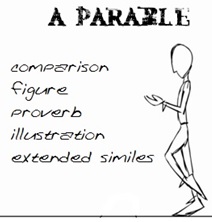
A parable: the Greek word parabole (GSN-<G3850>) is a comparison, Mk. 4:30 figure Heb. 9:9; 11:19 proverb Lk. 4:23 and an illustration; Mt. 13:3,10,13,18,24,31-36,53; 15:15; 21:33,45; 22:1; 24:32 they are extended similes.

They illustrate truth and make it clear by comparison with something that is already familiar. They impart instruction and rebuke without causing offense.  2Sam. 12 They create interest and hunger for further information. Mt. 13:10-17; 2Sam. 12  The stories are always true and the points illustrated must not be considered false and absurd. The historical background and the circumstances and occasion when uttered must be understood. Their words and details must be defined literally, not spiritually. The similarity between the point illustrated and the illustration must be noted.  The point illustrated is always stated with the parable or is clear by the occasion uttered.  The principles of interpretation are given by Jesus Himself. Any interpretation at variance with these principles or with the purpose of the parable is unscriptural.

Parables were used to reveal truth in a form intended to create more interest; Mt. 13:10-11,16 to make known new truths to interested hearers; Mt. 13:11-12,16-17 to make known mysteries by comparison with things already known; Mt. 13:11 to conceal truth from disinterested hearers and rebels at heart; Mt. 13:11-15 to add truth to those who love it and want more of it; Mt. 13:12 to take truth away from those who hate and do not want it; Mt. 13:12 and to fulfill prophecy. Mt. 13:14-17,35

For whosoever hath, to him shall be given, and he shall have more abundance: but whosoever hath not, from him shall be taken away even that he hath. Therefore speak I to them in parables: because they seeing see not; and hearing they hear not, neither do they understand. Mat. 13:12-13 KJV

A mystery is a secret previously hidden but now made clear so that no mystery remains for anyone who will accept the truth as revealed. Mt. 13:19; 2Cor. 4:3-4  At present the realm of profession, for tares and wheat and good and bad are now mixed together in the same kingdom. At the end of this age the two classes will be separated. The professors will be sent to hell and the possessors of the kingdom will continue in its literal aspect forever. Mt. 13:40-43,49-50; Mat. 25:31-46; Rev. 20; Zech. 14  Believers increase in knowledge, but unbelievers go into more ignorance and darkness. Rom. 1:18-32; Tit. 1:15; 1Jn. 1:7; Jn. 3:16-20 This is a work of man’s own unbelief and rebellion and the work of satan. Mt. 13:15,19; 2Cor. 4:3-4  They can see, but they refuse to see; they can hear, but they refuse to hear; they are capable of understanding, but they refuse to accept the truth, desiring to hold on to their old religious traditions and professions in preference to walking in the light of new truth.

And in them is fulfilled the prophecy of Esaias, which said, By hearing ye shall hear, and shall not understand; and seeing ye shall see, and shall not perceive: For this people’s heart is waxed gross, and their ears are dull of hearing, and their eyes they have closed; lest at any time they should see with their eyes, and hear with their ears, and should understand with their heart, and should be converted, and I should heal them. Mat. 13:14-15 KJV

This Old Testament prophecy of Israel written by Isaiah 6:9-10 is fulfilled in Matthew 13:14-15 Jn. 12:39-40; Acts 28:25 describing the condition of their hearts as being made fat, stupid, insensible, inattentive, dull, and callous. Acts 28:27 The idea here is that the people became this way, little by little, until they were past normal, vigorous obedience to truth and righteousness, but they were failing to do, see, hear, and understand with the heart.  They missed out on the promised blessings of conversion, a change of direction, a new walk with God and of physical healing, a change of health, a new health in God. Ps. 91; 103:3; Mt. 8:17; Isa. 53; Rom. 8:11; 1Pet. 2:24; 3Jn. 1:2; Jas. 5:14-16; Mk. 16:17-18; Jn. 14:12-15; 15:7,16

All these things spoke Jesus unto the multitude in parables; and without a parable spoke He not unto them: That it might be fulfilled which was spoken by the prophet, saying, I will open my mouth in parables; I will utter things which have been kept secret from the foundation of the world. Mat. 13:34-35 KJV