
The Kingdom of God

1Corinthians 4:17-21 For this cause have I sent unto you Timotheus, who is my beloved son, and faithful in the Lord, who shall bring you into remembrance of my ways which be in Christ, as I teach every where in every church. Now some are puffed up, as though I would not come to you. But I will come to you shortly, if the Lord will, and will know, not the speech of them which are puffed up, but the power. For the kingdom of God is not in word, but in power. What will you? shall I come unto you with a rod, or in love, and in the spirit of meekness? 

‘Timotheus’ this is Timothy (2Cor. 1:1; 1Tim. 1:2, 18; 6:20; 2Tim. 1:2; Phm. 1:1; Heb. 13:23). Converted by Paul on his first trip when he was at Lystra and Derbe (Acts 14:6-7 with 1Tim. 1:2). Part Jew and Greek, uncircumcised, but a good Christian (Acts 16:1-3). A miracle worker like Paul (1Cor. 16:10). Paul’s companion from Acts 16 (Acts 16:1-3; 17:14-15; 18:5; 19:22; 20:4; Rom. 16:21; Php. 2:19). It is believed by some that he was Paul’s scribe in writing Hebrews and Galatians. He had the gifts of the Spirit (1Tim. 4:14; 2Tim. 1:6). He was a great student of Scripture (2Tim. 1:5; 2:15; 3:15). ‘Son, and faithful in the Lord’ – he was a son in the faith (Acts 16:1).

‘Puffed up, as though I would not come to you.’ Some of their teachers were puffed up and haughty supposing that Paul would not visit Corinth. He said to them that he would to them shortly, not knowing the speech of them that was puffed up, but the power, for the kingdom of God that he demonstrated, was not in word only, but in power. He would prove his calling by a manifestation of power when he got there. He asked them whether he should come with a rod to correct them, or in love, and in a spirit of meekness?

‘Power’ [Greek: dunamis] inherit power; the power of reproducing itself, like a dynamo.

‘Kingdom of God is not in word, but in power.’ The sovereignty of God over the universe and includes the kingdom of heaven. It is moral and universal and has existed from the beginning and will know no end. The Kingdom of God existed even before the creation of the Earth. The angels and other spirit beings were in this kingdom when the Earth was created (Job 38:4-7). The Kingdom of Heaven could not have existed then, for there was no Earth for the kingdom from the heavens to rule (Matt. 3:2; 4:17; 5:3, 10, 19, 20; 7:21; 8:11; 10:7; 11:11-12; 13:11, 24, 31, 33, 44, 45, 47, 52; 16:19; 18:1, 3, 4, 23; 19:12, 14, 23; 20:1; 22:2; 23:13-14; 25:1). It is noticeable that all these references are found in Matthew. The reason for this fact is that this gospel presents Christ as Jehovah’s King. The word Heaven in all the above passages is in the plural, and the phrase Kingdom of Heaven literally means the kingdom from the heavens. It is a dispensational term and refers to the Messiah’s kingdom on the Earth. It is not from or out of this world. The sovereignty comes from Heaven, because the King is from there (John 18:36). It was to this end He was born, and this was the first subject of His ministry (Matt. 3:2; 4:17). The usage of the two terms in parallel passages may be explained as follows: The Kingdom of Heaven is a lesser term than the Kingdom of God. It is the earthly sphere of the universal Kingdom of God, and in this respect the terms have almost all things in common. Therefore, in an earthly sense, everything that is or could be spoken of the Kingdom of Heaven could be spoken also of the Kingdom of God, for the Kingdom of Heaven is the earthly sphere of the Kingdom of God. On the other hand, there are some statements made of the Kingdom of God in this age that could not possibly be spoken of the Kingdom of Heaven. When the two terms are used in parallel passages they refer to this age only, for the Kingdom of Heaven during this age has been changed from a literal kingdom to the sphere of profession, because of the rejection of the King who will be the earthly King of the Kingdom of Heaven when it is finally set up in the next age.
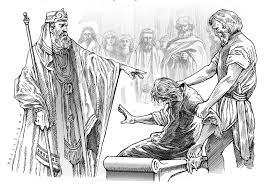
The Parable of the Marriage Feast

And Jesus answered and spake unto them again by parables, and said, The kingdom of heaven is like unto a certain king, which made a marriage for his son, And sent forth his servants to call them that were bidden to the wedding: and they would not come. Again, he sent forth other servants, saying, Tell them which are bidden, Behold, I have prepared my dinner: my oxen and my fatlings are killed, and all things are ready: come unto the marriage. But they made light of it, and went their ways, one to his farm, another to his merchandise: And the remnant took his servants, and entreated them spitefully, and slew them. But when the king heard thereof, he was wroth: and he sent forth his armies, and destroyed those murderers, and burned up their city. Then saith he to his servants, The wedding is ready, but they which were bidden were not worthy. Go ye therefore into the highways, and as many as ye shall find, bid to the marriage. So those servants went out into the highways, and gathered together all as many as they found, both bad and good: and the wedding was furnished with guests. And when the king came in to see the guests, he saw there a man which had not on a wedding garment: And he saith unto him, Friend, how camest thou in hither not having a wedding garment? And he was speechless. Then said the king to the servants, Bind him hand and foot, and take him away, and cast him into outer darkness; there shall be weeping and gnashing of teeth. For many are called, but few are chosen. Mat 22:1-14 KJV

This parable is not to be confused with the parable of the great supper in Luke 14:16-24. Neither of these stories is an illustration of the Marriage Supper of the Lamb of Revelation 19:1-10. These passages are illustrations of the kingdom of Heaven in this age. The certain king making a marriage (marriage feast) for his son illustrates God, who has made possible the blessings of the kingdom and the Gospel to all. Jn. 3:16; Rom. 8:32; 1 Cor. 2:9  The Jews were the first ones invited, but they would not come. Mt. 10:5-7; 15:21-28; Jn. 1:11-13 The occasion for this parable was the rejection of Christ by the Jews. Mt. 21:42-46  The servants sent out were Christ, the apostles, the seventy, and the early ministers of the Church. All went first to Israel, but met with no response, as far as the nation was concerned. They were persecuted and killed until the city was destroyed and Israel was scattered. Mt. 24:2; Lk. 21:20-24; Acts 2:22-24; 7:54-60; 8:1-8; 13:44-49; Rom. 11

All things are ready” 22:4 illustrates the time for the Jews to accept their Messiah and the time for the fulfillment of the promise made to their fathers concerning the kingdom.  “But they made light of it” 22:5; Acts 13:45-49; 18:6; Mt. 23:37-39 The rejection of Jesus by Israel freed God from all responsibility to them in fulfilling His covenants with them, so His program became a worldwide one for all men. Jn. 3:16; Rom. 1:16; 2Cor. 12:13

At the rejection of the Jews by God, because they would not accept the invitation to partake of the blessings, God began to invite all kinds of people, as in the parables in Matthew 13.  The man without the wedding garment illustrates the ones in the kingdom of Heaven in this age, or during their lifetime, who fail to prepare for eternity, or for their place in the literal kingdom of Heaven, when it is set up at the return of Christ. Mt. 18:1-4; Jn. 3:3-8; Rev. 19:7-8 This life is the only time men have to put on that righteousness of the saints in order to get into the real, literal kingdom.  This negligent man was commanded to be put in the same furnace of fire in which the tares, bad fish, and all the wicked were commanded to be put at the end of this age. Mt. 13:37-43, 49-50; 24:51; 25:31-46; Rev. 20:11-15

The central truth which the story illustrates is stated in verse 14.  It is the same truth the parable of the laborers in the vineyard illustrates. “For many are called, but few are chosen,” or “whosoever exalteth himself shall be abased; and he that humbleth himself shall be exalted”. Lk. 14:11; 18:14  The difference in the two parables is that the one story illustrates the importance of humility in service, while this one illustrates the importance of preparation in this life to be chosen of God and accepted when we shall see Him. All are called to salvation, Mt. 11:28; Jn. 3:16; Rev. 22:17 but few will finally be saved. Mt. 7:13-14; Lk. 13:23-30

Jesus was teaching these Jews who desired His life and who rejected Him as their Messiah that they were not worthy of the blessings that He had in store for them, that the Gentiles and individual Jews who accepted the invitation would be blessed with the things that the Jewish nation rejected, and that there must be a preparation made before they would be admitted into the presence of God. The necessary preparation was to put on the wedding garment or change their raiment. It was the custom in the East for royal guests to put on garments provided, else they would be excluded from the feasts. A rejection of the garment provided was taken as an insult and a total disregard for the one who provided the garment. It was an avowal that the guest denied the authority and despised the power of the one providing the raiment. This was exactly true of the Jews who refused the teaching of Christ, which was able to make them wise unto salvation.

I will answer the call by choosing God’s salvation through Jesus Christ; I will not deny the authority or despise the power that is provided, so that I can be prepared and be admitted into the presence of God.