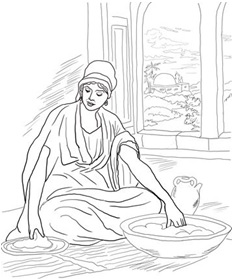
Another parable spoke He unto them; The kingdom of heaven is like unto leaven, which a woman took, and hid in three measures of meal, till the whole was leavened. Mat. 13:33 KJV
The kingdom of Heaven here is “like” leaven (sour dough) that is always used in a bad sense in Scripture, as meal is in a good sense. Therefore, the common interpretation of leaven converting the world is the exact opposite of the true interpretation of the leaven corrupting the meal. Note the use of leaven in Scripture:
In the Old Testament leaven is used to portray the evil nature of the sinner: Exodus 12:8, 15-20; 34:25; Levitikus 2:11; 6:17; 10:12 These last three passages refer to leaven being forbidden in certain sacrifices. Only in one sacrifice was it used in Levitikus 7:12-13 and here it signifies that though the believer has made peace with God through the work of another (Christ), there are still human traits and selfishness in him which must be continually purged by growth in grace.
In the New Testament leaven is used in four ways: first, the leaven of the Pharisees which was external religion, legalism, and hypocrisy; Mt. 23:14-28; Lk. 12:1 second, the leaven of the Sadducees, which was skepticism as to the supernatural and the teachings of the Scriptures on resurrection, angels, and spirits; Mt. 22:23-39; Acts 23:8 third, the leaven of the Harridans, which was materialism, a mixture of religion and worldliness, a political religion; Mk. 8:15 fourth, the leaven of both Pharisees and Sadducees as to their evil doctrines and practices. Mt. 16:11-12; 23:14, 16, 23-28
This illustrates how the kingdom of heaven teachings and the program of God in this age would become corrupted by false doctrines and unscriptural programs until the whole is corrupted. Lk. 18:8; 1Tim. 4:1-8; 2Tim. 3:5; 4:3-4; 2Pet. 3:3-4 A woman is a common symbol of evil in the moral or religious sphere and when used figuratively in an evil sense ‘she’ represents wickedness, fallacy, uncleanness, and unfaithfulness, Lam. 1:17 harlotry, Ezek. 16:15,22,26,28-59; 23:1-49; 36:17; Hos. 1:2; 2:2-17; 3:1; Rev. 17 wickedness, Zech. 5:5-11; Rev. 17:5 and false religion. Rev. 17 Thus, in a bad ethical sense a woman always symbolizes something wrong or out of place religiously. Zech. 5:7-8; Rev. 2:20; 17:1-18 When used in a good sense women represent Israel, cp Gen. 37:9-10 with Rev. 12; Ezek. 16 the two covenants, Gal. 4:21-31 and righteousness and purity. 2Cor. 11:2; Rev. 19:7-8 A meal symbolizes the Word of God. Mt. 4:4; Jn. 6:47-63 and the three hidden measures of the meal illustrates all false teachings, religious programs, and professed Christian lives that seek to hide behind the Word of God (Christ as the Bread of Life and the Word of God Mt. 4:4; Jn. 6:47-63; Jn. 1:1).
The parable illustrates how the kingdom of Heaven would become like leaven, which a woman uses to corrupt Christ and His teachings. Both Christ and the Word of God are being corrupted today by the false church and its teachings. These teachers dominate the realm of profession and use it to deceive people by exalting their own words above the Word of God and their own leaders above Christ; by making the people feel that their church is infallible and that obedience to it and its dogmas is better than obedience to civil governments and by many comparable doctrines contrary to the Bible, thus corrupting the truth through the realm of profession.
Your glorying is not good. Know ye not that a little leaven leaven the whole lump? Purge out therefore the old leaven, that ye may be a new lump, as ye are unleavened. For even Christ our passover is sacrificed for us: Therefore let us keep the feast, not with old leaven, neither with the leaven of malice and wickedness; but with the unleavened bread of sincerity and truth. 1Cor. 5:6-8 KJV

 Living the Word