
Search the Scriptures

John 5:39-47 Search the scriptures; for in them you think you have eternal life: and they are they which testify of me. And you will not come to me, that you might have life. I receive not honour from men. But I know you, that you have not the love of God in you. I am come in my Father’s name, and you receive me not: if another shall come in his own name, him you will receive. How can you believe, which receive honour one of another, and seek not the honour that come from God only? Do not think that I will accuse you to the Father: there is one that accuse you, even Moses, in whom you trust. For had you believed Moses, you would have believed me: for he wrote of me. But if you believe not his writings, how shall you believe my words? 

Jesus accused the Jews of searching the Scriptures because they think they can find eternal life therein, whereas the Scriptures testify of Jesus giving eternal life to those who believe He is from the Father, yet the Jews rejected Him and thus they searched in vain. ‘Testify of me’ – His “works” were only indirect testimonies; the Father Himself has given direct testimony concerning Jesus (John 5:30-37; Mat. 3:17; 17:5). That kind of testimony cannot be derived by the Jews, for they have never heard the Father’s voice; (John 5:37) neither do they have the direct witness of the Spirit as all believers have, for they do not have His Word in them and they refuse to believe in Christ whom the Father has sent (John 5:38, 40). Yet there is one form of direct testimony of Jesus that they (and all others) can know – that is, if you will search the Scriptures.

Christ has never sought men’s honour – Greek: doxa, meaning approval or praise. The eleventh New Testament prophecy in John that is unfulfilled: ‘I am come in my Father’s name, and you receive me not: if another shall come in his own name, him you will receive.’ All Christ’s works were done in the name of His Father (John 10:25). The future Antichrist will be received by the Jews and they will make a seven-year covenant with him (Dan. 8:25; 9:27). Just as so many come today in Christ Jesus’ name as deceivers (Matt. 24:5, 11, 24) and they have so many followers, yet He will at the time of judgement send them away (Matt. 7:22-23) for misusing His name and His Word (2Tim. 4:2-4).

Christ warned the Jews that they must not think He will have to accuse them, they considered Him an enemy, but Moses whom they trusted as a friend will accuse and condemn them in the judgment day.

‘But if you believe not his writings, how shall you believe my words?’ Here Christ bears full testimony to the divine authorship and authority of the Pentateuch. He also affirms that no man can believe His words if he does not believe Moses’ writings, for they confirm each other.
Resurrection of Life

John 5:28-29 Marvel not at this: for the hour is coming, in the which all that are in the graves shall hear his voice, And shall come forth; they that have done good, unto the resurrection of life; and they that have done evil, unto the resurrection of damnation. 

The ninth New Testament prophecy in John: ‘The hour is coming, and now is, when the dead shall hear the voice of the Son of God: and they that hear shall live’ are fulfilled and continuously being fulfilled as men turn to God for salvation. They that hear shall live (Acts 3:19; Rom. 10:9-17). ‘So hath He given to the Son to have life in himself’ – As God, this could not be true, but as the Son of man all life-giving powers and all authority to redeem and judge were given by the Father through the Holy Spirit (Isa. 11:2; 42:1; 61:1; Acts10:38; Mat. 12:28).

The tenth New Testament prophecy in John is unfulfilled ‘for the hour is coming, in the which all that are in the graves shall hear his voice, And shall come forth; they that have done evil, unto the resurrection of damnation.’ Jesus is saying that we must not marvel at His power to resurrect souls from death in sin (John 5:25; Eph. 2:1-9) and that He will also resurrect dead bodies from the grave (John 5:28-29; 1Cor. 15:20-23; Rev. 20:4-15).

Only the bodies die at physical death (Jas. 2:26) and only the bodies go into the graves to await physical resurrection (John 5:28-29). All scriptures on the future resurrection of the dead refer to the bodies that sleep in the graves, not to the souls and spirits which are immortal and do not sleep in the graves. The righteous are in a conscious state in heaven (2Cor. 5:8; Eph. 4:8-10; Php. 1:21-24; Heb. 12:22-23; Rev. 6:9-11) and the wicked are conscious in hell (Luke 16:19-21; Isa. 14:9; Rev. 20:11-15). The souls and spirits of all men will be brought back from heaven or hell to the place where the bodies were buried and God will then resurrect them so that they will hear the voice of the Son of God and come forth to live forever in heaven or hell (Dan. 12:2; 1Thes. 4:13-18). The bodies cannot come forth out of the graves lifeless and dead, so when the souls and spirits reunite with the bodies in the resurrection they will come forth like Christ did when His soul and spirit came back from hell to the body in the tomb and He came out of the grave (Psa. 16:10; Mat. 12:40; 28:1-6; Eph. 4:8-10).

The righteous that ‘have done good’ (Greek: poieo, from which we get the word poem) refers not so much to individual acts of goodness as to character, nature, and conduct. The righteous that are ‘blessed and holy’ (Rev. 20:4-6); that ‘are Christ’s’ (1Cor. 15:23, 51-58; Gal. 5:24); that are ‘worthy’ (Luke 21:36); that are ‘in Christ’ (1Thes. 4:16-17; 2Cor. 5:17); that are in ‘the way, the truth, and the life’ (John 14:1-6); that have purified themselves ‘even as He is pure’ (1Jn. 3:2-3); that are without spot or wrinkle and without blemish and are the body of Christ (Eph. 1:22-23; 5:27; 1Cor. 12:13; Col. 1:18, 24) – these will be resurrected to eternal life 1,000 years before the wicked (John 5:29; Dan. 12:2). The wicked will be resurrected to eternal punishment and damnation 1,000 years after the resurrection of the righteous (Dan. 12:2; Rev. 14:9-11; 20:4-6, 11-15; 21:8; 22:15).

The Authority of the Son

John 5:19-27 Then answered Jesus and said unto them, Verily, verily, I say unto you, The Son can do nothing of himself, but what He see the Father do: for what things so ever He does, these also does the Son likewise. For the Father love the Son, and showed him all things that himself doeth: and he will show him greater works than these, that you may marvel. For as the Father raise up the dead, and quicken them; even so the Son quicken whom he will. For the Father judge no man, but hath committed all judgment unto the Son: That all men should honour the Son, even as they honour the Father. He that honour not the Son honour not the Father which hath sent him. Verily, verily, I say unto you, He that hear my word, and believe on him that sent me, hath everlasting life, and shall not come into condemnation; but is passed from death unto life. Verily, verily, I say unto you, The hour is coming, and now is, when the dead shall hear the voice of the Son of God: and they that hear shall live. For as the Father hath life in himself; so hath he given to the Son to have life in himself; And hath given him authority to execute judgment also, because he is the Son of man.

The Son does the same works as the Father in perfect union with Him and His will. No person of the Trinity acts independently of the others. During His ‘self-emptying’ life He was an agent of the Father, who worked through Him by the Holy Spirit (Isa. 11:2; 61:1; Acts 10:38).

The Son was limited in knowledge and wisdom and power during the days of His flesh (Isa. 50:4; Luke 2:40, 52; Mat. 11:25-27; 24:36; Acts1:6-8). The eight New Testament prophecy in John ‘and he will show him greater works than these, that you may marvel’ was fulfilled in the increased works of Christ.

‘So the Son quicken whom He will.’ Jesus had unlimited and absolute authority from God by the fullness of the Spirit (John 3:34) to act as He willed in resurrecting men (John 5:28-29; 6:39; 11:25). The Father will judge the world by Jesus Christ (Acts 17:31; 12:1-25:48).

‘Even as they honour the Father’ This absolute equality with the Father in honour proves His deity and membership in the Trinity (1Jn. 5:7).

He that obeys God’s Word and believe (trust without doubt) in the Father, have everlasting (eternal) life and will not come to judgment before God, but as for all men the law of sowing and reaping is always in effect (Gal. 6:7-8) and anyone can still fall away from grace when they sin wilfully (Heb. 6:4-6; 10:26-31).

To pass from death unto life happens when 2 Corinthians 5:17 come to pass: “Therefore if any man be in Christ, he is a new creature: old things are passed away; behold, all things are become new.” See also 1 John 3:14 and Galatians 5:24.

The Hour Come

John 4:21-26 Jesus say unto her, Woman, believe me, the hour come, when you shall neither in this mountain, nor yet at Jerusalem, worship the Father. You worship you know not what: we know what we worship: for salvation is of the Jews. But the hour come, and now is, when the true worshippers shall worship the Father in spirit and in truth: for the Father seek such to worship him. God is a Spirit: and they that worship him must worship him in spirit and in truth. The woman says unto him, I know that Messias come, which is called Christ: when he is come, he will tell us all things. Jesus say unto her, I that speak unto thee am he. 

Jesus answered the woman on her question from verse 20, the hour cometh when you shall neither in this mountain nor yet at Jerusalem, worship the Father which is the sixth New Testament prophecy in John that is fulfilled. The answer embodies a great principle, that true worship is that of the heart and not of or at any particular place.

‘Father’ the Greek word is pater, and when used of God it expresses relationship and parentage to His “only begotten Son,” and to adopted sons (Rom. 8:15; Gal. 4:5; Eph. 1:5).

‘Salvation is of the Jews’ – the salvation predicted by the prophets was to come through the Messiah of the Jews (Luke 2:30; Rom. 3:1-2; 9:4-5; 1Pet. 1:10-12).

The hour is here now when true worshippers shall worship God in Truth, thus in Christ who is the Word (John 1:1,14,17; 14:6). ‘In spirit’ the area of the mind where our thoughts are produced and of which we are commanded to renew our minds (Rom. 12:2; Eph. 4:23).

God is a Spirit Being, and must, therefore, be worshipped ‘in spirit,’ not the sun, moon, stars; nor an image of wood, stone, or metal; and not beast or man. He is not the air, wind, universal mind, love or some impersonal quality. He has a personal spirit (Psa. 143:10; Isa. 30:1) with a mind (Rom. 11:34), intelligence (Gen. 1:26; Rom. 11:33), will (Rom. 8:27; 9:19), power (Eph. 1:19; 3:7, 20; Heb. 1:3), truth (Psa. 91:4), faith and hope (Rom. 12:3; 1Cor. 13:13), righteousness (Psa. 45:4), faithfulness (1Cor. 10:13), knowledge and wisdom (Isa. 11:2; 1Tim. 1:17), reason (Isa. 1:18), discernment (Heb. 4:12), immutability (Heb. 6:17), and many other attributes, powers, and spirit faculties.

Cleansing the Temple

John 2:13-17  And the Jews’ Passover was at hand, and Jesus went up to Jerusalem, And found in the temple those that sold oxen and sheep and doves, and the changers of money sitting: And when he had made a scourge of small cords, he drove them all out of the temple, and the sheep, and the oxen; and poured out the changers’ money, and overthrew the tables; And said unto them that sold doves, Take these things hence; make not my Father’s house a house of merchandise. And his disciples remembered that it was written, The zeal of thine house hath eaten me up. 

It started out to be ‘the Lord’s Passover’ (Exo. 12:11, 12:27; Lev. 23:5; Num. 28:16), but now it had degenerated to be “the Jews’ Passover” (John 2:13; 6:4; 11:55). The feasts of the Lord (Lev. 23:2) had now become the feasts of the Jews (John 5:1; 6:4; 7:2; 11:56; 19:42). Even the commandments were nullified by the traditions of men (Matt. 15:1-9; 16:6-12).

According to historians, 256,500 animals were sacrificed each Passover, so the market must have been huge. The priests sold licenses to the vendors, so this profanation must have been a large source of revenue.

Jesus made a scourge of small cords; He plaited a whip of rush-ropes and drove the animals and the sellers out of the temple. These dealers were very unpopular because of their extortions; they were also conscious that they were profaning the temple and violating the law. They were a stumbling stone (Matt. 16:23; 18:7) for those who wanted to reconcile with God.

My Father’s is a term used by Jesus 60 times of God (John 5:17, 43). The zeal of thine house hath eaten me up is the second Old Testament prophecy fulfilled in John (Psa. 69:9).

The Son of God and of Man

John 1:49-51  Nathanael answered and saith unto him, Rabbi, thou art the Son of God; thou art the King of Israel. Jesus answered and said unto him, Because I said unto thee, I saw thee under the fig tree, believe thou? thou shalt see greater things than these. And he saith unto him, Verily, verily, I say unto you, Hereafter you shall see heaven open, and the angels of God ascending and descending upon the Son of man. 

The second New Testament prophecy fulfilled in John – thou shall see greater things than these – Nathaniel did see many greater works when he saw all the works of Christ for over three years. John 1:51 is to be fulfilled in the eternal kingdom of Jesus on earth when angels will ascend and descend in a more literal way than now (Matt. 13:41-43; 24:31).

Verily, verily means Surely, surely or Amen, amen. So used for emphasis, and only by Him who is the truth (John 14:6). Always used singly elsewhere: in the Old Testament only 16 times; 30 times in Matthew; 15 times in Mark; and 8 times in Luke and only by Christ.

The Son of man is used 88 times of Christ in the New Testament and once in Daniel 7:13 where it was predicted that He would come as the Son of man. It always has the definite article when used of Christ, but not when used of ordinary men. He, Jesus, is God’s Man to redeem mankind. He is God’s answer to satan to guarantee his defeat and restore man’s original dominion.

The Purpose of Parables

And the disciples came, and said unto him, Why speak thou unto them in parables? He answered and said unto them, Because it is given unto you to know the mysteries of the kingdom of heaven, but to them it is not given.  Mat. 13:10-11 KJV

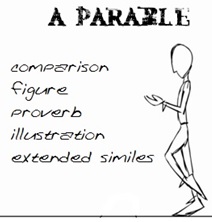
A parable: the Greek word parabole (GSN-<G3850>) is a comparison, Mk. 4:30 figure Heb. 9:9; 11:19 proverb Lk. 4:23 and an illustration; Mt. 13:3,10,13,18,24,31-36,53; 15:15; 21:33,45; 22:1; 24:32 they are extended similes.

They illustrate truth and make it clear by comparison with something that is already familiar. They impart instruction and rebuke without causing offense.  2Sam. 12 They create interest and hunger for further information. Mt. 13:10-17; 2Sam. 12  The stories are always true and the points illustrated must not be considered false and absurd. The historical background and the circumstances and occasion when uttered must be understood. Their words and details must be defined literally, not spiritually. The similarity between the point illustrated and the illustration must be noted.  The point illustrated is always stated with the parable or is clear by the occasion uttered.  The principles of interpretation are given by Jesus Himself. Any interpretation at variance with these principles or with the purpose of the parable is unscriptural.

Parables were used to reveal truth in a form intended to create more interest; Mt. 13:10-11,16 to make known new truths to interested hearers; Mt. 13:11-12,16-17 to make known mysteries by comparison with things already known; Mt. 13:11 to conceal truth from disinterested hearers and rebels at heart; Mt. 13:11-15 to add truth to those who love it and want more of it; Mt. 13:12 to take truth away from those who hate and do not want it; Mt. 13:12 and to fulfill prophecy. Mt. 13:14-17,35

For whosoever hath, to him shall be given, and he shall have more abundance: but whosoever hath not, from him shall be taken away even that he hath. Therefore speak I to them in parables: because they seeing see not; and hearing they hear not, neither do they understand. Mat. 13:12-13 KJV

A mystery is a secret previously hidden but now made clear so that no mystery remains for anyone who will accept the truth as revealed. Mt. 13:19; 2Cor. 4:3-4  At present the realm of profession, for tares and wheat and good and bad are now mixed together in the same kingdom. At the end of this age the two classes will be separated. The professors will be sent to hell and the possessors of the kingdom will continue in its literal aspect forever. Mt. 13:40-43,49-50; Mat. 25:31-46; Rev. 20; Zech. 14  Believers increase in knowledge, but unbelievers go into more ignorance and darkness. Rom. 1:18-32; Tit. 1:15; 1Jn. 1:7; Jn. 3:16-20 This is a work of man’s own unbelief and rebellion and the work of satan. Mt. 13:15,19; 2Cor. 4:3-4  They can see, but they refuse to see; they can hear, but they refuse to hear; they are capable of understanding, but they refuse to accept the truth, desiring to hold on to their old religious traditions and professions in preference to walking in the light of new truth.

And in them is fulfilled the prophecy of Esaias, which said, By hearing ye shall hear, and shall not understand; and seeing ye shall see, and shall not perceive: For this people’s heart is waxed gross, and their ears are dull of hearing, and their eyes they have closed; lest at any time they should see with their eyes, and hear with their ears, and should understand with their heart, and should be converted, and I should heal them. Mat. 13:14-15 KJV

This Old Testament prophecy of Israel written by Isaiah 6:9-10 is fulfilled in Matthew 13:14-15 Jn. 12:39-40; Acts 28:25 describing the condition of their hearts as being made fat, stupid, insensible, inattentive, dull, and callous. Acts 28:27 The idea here is that the people became this way, little by little, until they were past normal, vigorous obedience to truth and righteousness, but they were failing to do, see, hear, and understand with the heart.  They missed out on the promised blessings of conversion, a change of direction, a new walk with God and of physical healing, a change of health, a new health in God. Ps. 91; 103:3; Mt. 8:17; Isa. 53; Rom. 8:11; 1Pet. 2:24; 3Jn. 1:2; Jas. 5:14-16; Mk. 16:17-18; Jn. 14:12-15; 15:7,16

All these things spoke Jesus unto the multitude in parables; and without a parable spoke He not unto them: That it might be fulfilled which was spoken by the prophet, saying, I will open my mouth in parables; I will utter things which have been kept secret from the foundation of the world. Mat. 13:34-35 KJV